A Cheeky Pair

Rainbow Lorikeets - Photograph by Laura Lecce
Rainbow Lorikeets – Photograph by Laura Lecce

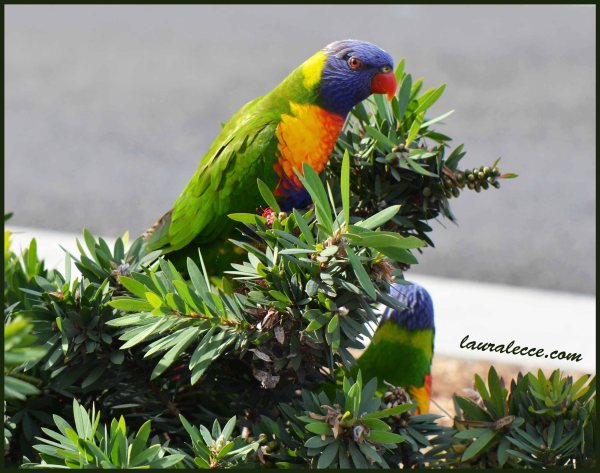
I had forgotten what it was like in Australia waking up to such distinctive bird calls. Those which I had listened to my entire childhood, but only recently paid attention to. The earliest birds are the kookaburras (click here for post) with their loud and projecting laughs, mocking the sun as it rises. They wake the cockatoos, who show their distain with long and piercing screeches. Next are the large flocks of rainbow lorikeets (in the photo) which can be heard having territorial squabbles across the trees with their sharp and angry chirps. They are one of Australia’s most colorful birds, and like other parrots, they know how to be noisy! They mostly travel in pairs, and once paired will be monogamous for life. When feeding in a flock, the male will threateningly hop around his partner while she feeds to make sure no other birds interrupt her meal. They eat fruit, pollen and nectar, mostly from native Australian trees and shrubs such as the eucalyptus, and the bottle brush (Callistemon) seen in this photo. It’s hard to be angry about being woken up early when the birds are as pretty as these ones!
Flower Friday – Eucalyptus

Aussie Natives - Photograph by Laura Lecce
Aussie Natives – Photograph by Laura Lecce

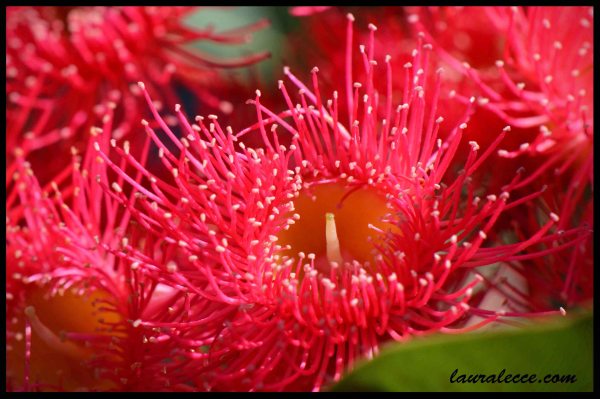
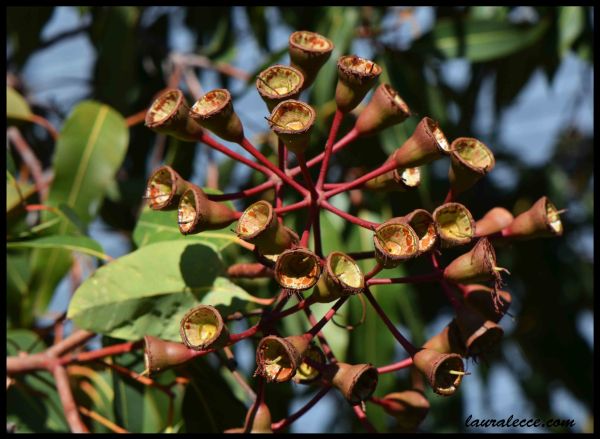
For those of you wondering why my blog has been quiet lately, I have been on vacation to my home country of Australia. So on my return, I thought it fitting to share with you some photos I took along the way. Todays flower is from the eucalyptus tree. There are many varieties of these beautiful trees and shrubs and most are native to Australia. They play a vital role in  Australia’s natural environment and are found abundantly throughout the country, the only major environment they do not inhabit is Australia’s rainforests. Interestingly they release biochemicals which can influence the growth, reproduction and survival of other organisms, and thus inhibit other plant species growing nearby (this is called allelopathy). Planting these trees and shrubs in your yard are a great way to encourage Australian wildlife to visit your garden, as they attract and support a multitude of Australian wildlife. The most well known eucalyptus eater is the koala, but they also attract cockatoos, rainbow lorikeets and other parrots, gliders and possums. The flowers alone are beautiful to photograph, and even once they fall off, the remaining gum nuts still make for interesting subjects (seen in the photo below). Happy weekend everyone, its a long one in the USA… enjoy!

Eucalyptus - Photograph by Laura Lecce
Eucalyptus Gum Nuts – Photograph by Laura Lecce

Flower Friday – Frangipani

Frangipani - Photograph by Laura Lecce
Frangipani – Photograph by Laura Lecce

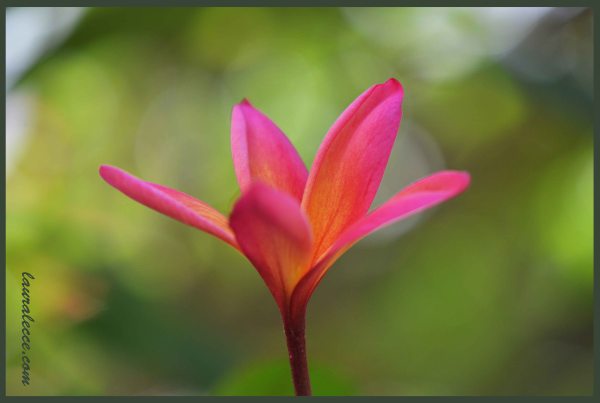
The frangipani (Plumeria) is a beautiful plant with gorgeous flowers that come in varieties of whites, yellow, oranges and pinks. Although native to Central and South America, they are a popular plant that can now be found in most tropical places around the world. This plant however, is not without its quirks, being related to Oleander, both produce an irritating sap similar to Euphorbia plants (click here to see my post on Euphorbia). Frangipanis are also fragrant, most heavily at night, to attract the sphinx moth under the false pretense that the flowers contain a sweet smelling nectar. As the moth goes from flower to flower in search of the non-existent nectar, it is in fact being duped into pollinating the flowers. Cheeky frangipanis…. Have a great weekend everyone!

Flower Friday – Pink Speckled Phalaenopsis

Pink Speckled Phal - Photograph by Laura Lecce
Pink Speckled Phal – Photograph by Laura Lecce

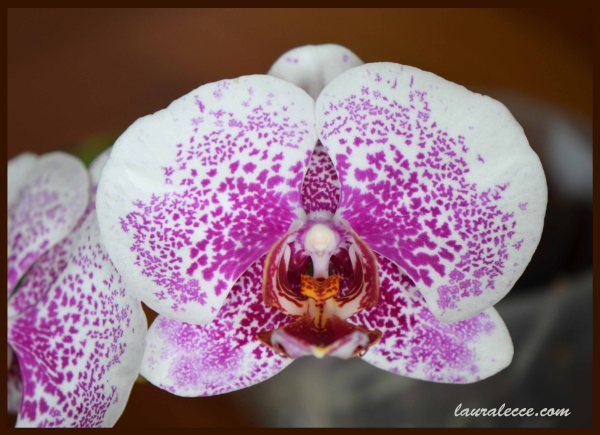
Actually the proper name for this orchid is Doritaenopsis Ackers Sweetie ‘Dragon Tree Maple.’ It is one of my favorite hybrids to grow at home, mostly because the flowers were so big (the size of my palm) and so interesting to look at. Every time I look into the pink speckles of this flower it looks like a huge colony of bats flying away from the cave in the center and getting further and further into the distance as they fly away. Maybe I just have a vivid imagination, but either way the pattern on this flower really does come alive! Have a fantastic weekend everyone!

If you’d like to see more Flower Friday posts, please click here.

Orangutan Sanctuary

Orangutan - Photograph by Laura Lecce
Orangutan – Photograph by Laura Lecce

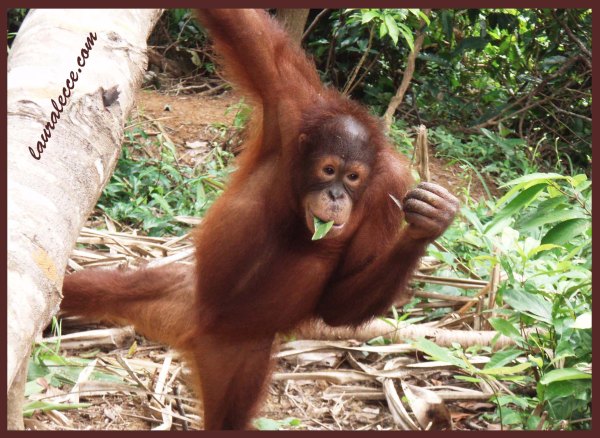
One of my most memorable wildlife experiences was visiting an orangutan sanctuary at the Rasa Ria Nature Reserve in Kota Kinabalu, East Malaysia. This reserve provides protected space where orphaned orangutans are rehabilitated and hopefully reintroduced into their natural habitat. Here the orangutans are taught the skills they need to eventually live an independent life. Orangutans are native to Indonesia and Malaysia and are currently found only in the rainforests of Borneo (island shared by Malaysia, Indonesia and Brunei) and Sumatra (Indonesian island). Watching juvenile orangutans is such a heartwarming pleasure. They are intelligent, playful, inquisitive and tactile animals, that it brings sadness to remember that they are at the sanctuary because of poaching and deforestation. Though it is because of these sanctuaries that people are made aware, educated and hopefully interested in actively saving these precious animals.

To see my other posts with primates click here.

Pod of Pelicans

Pod of Pelicans - Photograph by Laura Lecce
Pod of Pelicans – Photograph by Laura Lecce

Pelicans can be found in many countries around the world, but none of them quite compare with the strikingly beautiful, black and white feathered, pink billed features of the Australian Pelican. For a medium bodied pelican, it actually possesses the largest bill size of any bird in existence. Quite common in Australia, these birds are a icon of the Australian coast. This photo was taken in Western Australia, and this pod of pelicans are patiently waiting for a feed from a local fisherman who is cleaning his recently caught fish to the right of this photo. These graceful birds which are usually quite polite and not overly aggressive for their size, feed on fish, insects, yabbies and shrimp, but should not be underestimated, for even small dogs have been swallowed by these large billed birds.

Click here for other posts from Western Australia.

Teddy Bear Crab

Teddy Bear Crab - Photograph by Laura Lecce
Teddy Bear Crab – Photograph by Laura Lecce

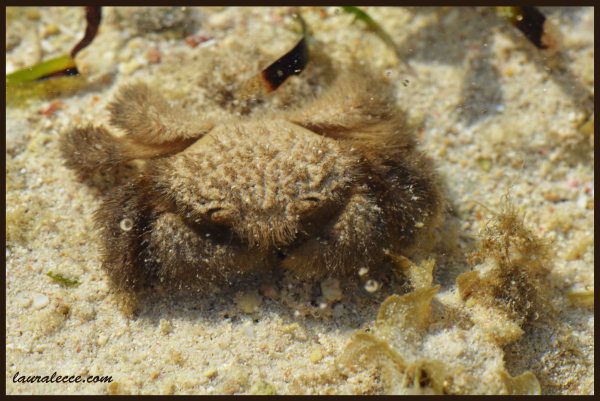
This furry little creature is called a Teddy Bear Crab because its body and legs are covered in fur (setae). You can imagine my surprise to find a crab covered in fur, but there are actually many different species of this little crab. I took this photo in a very shallow reef off the coast of Vanuatu (a pacific island nation about 3 hours flight from the east coast of Australia). This shallow reef was partly exposed each day at low tide and was a great place to observe and photograph many weird and wonderful sea critters. This particular crab is covered in fur to trap sand and sediment which help it camouflage itself on the sandy floor. Some species of this crab have been seen carrying around mini stinging anemones in their two front claws to present to any potential threats it might encounter. A very ingenuitive way of forcing other marine creatures to be portable body guards.

For other posts on underwater creatures click here.

Flower Friday – Bromeliad

Bromeliad - Photograph by Laura Lecce
Bromeliad – Photograph by Laura Lecce

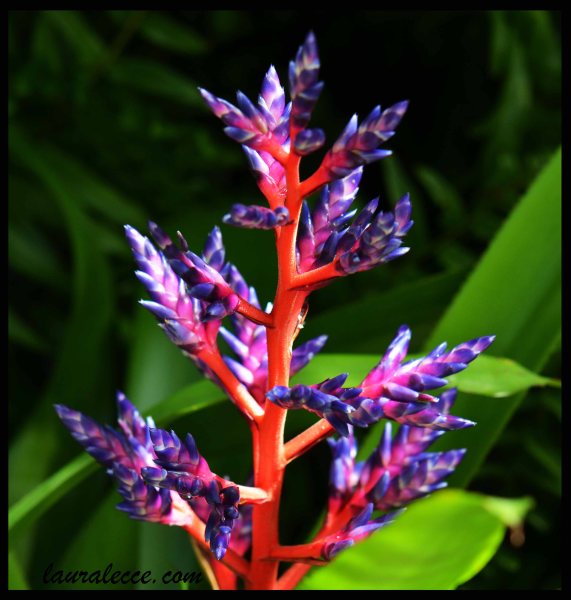
I just love this photo of a bromeliad flower. The fiery red stem, pretty purples and pinks of the flower bases against the lime green leaves, what a gorgeous display of intense colors. Bromeliads are quite a well known plant with a huge variety of colors and sizes. The smallest one being Spanish moss, and the largest one, Queen of the Andes reaches 3 meters (almost 10 feet) tall, with a flower spike of 9-10 meters (32 feet) tall! Most of you would have at some point eaten a bromeliad…the pineapple (which will no doubt appear in a future post). Have a bright and colorful weekend everyone!

Existence

Existence - Photograph by Laura Lecce
Existence – Photograph by Laura Lecce

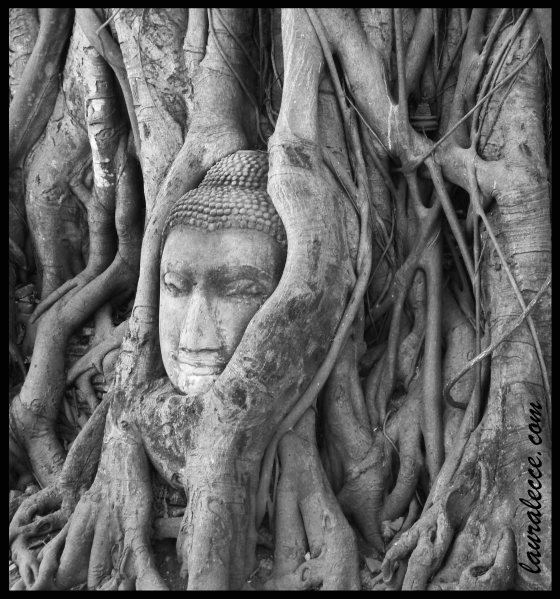
This Buddha head enveloped within a tangle of roots belonging to a banyan tree is one of the most recognizable images in Thailand. It is located in Wat Mahathat (a Buddhist temple ruin) in the city of Ayutthaya (the ancient capital of Siam). A temple that was built in the 14th century but later ravaged by invading Burmese which destroyed many of the Buddha statues by lopping off their heads. To me this sacred site is a symbol that even things seemingly destroyed can endure and continue to have a meaningful existence beyond the ruins they have become.

Clownfish Quirks

Clownfish Quirks - Photograph by Laura Lecce
Clownfish Quirks – Photograph by Laura Lecce

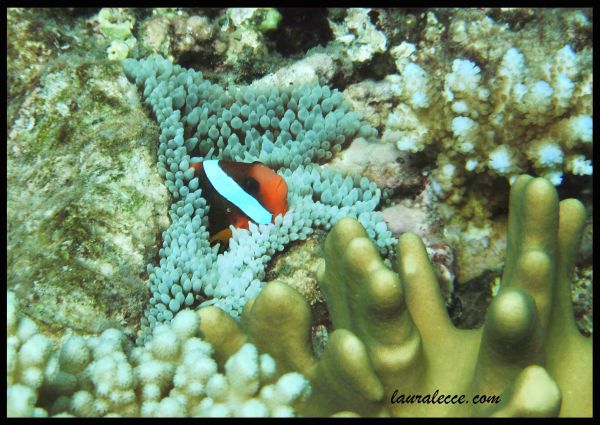
So these little fish are more amazing than I ever knew. They live amongst anemone tentacles protected by a layer of mucous that covers their body. This symbiotic relationship means that clownfish are protected from predators, and get left over scraps of food from the anemone. In exchange the clownfish drive off intruders and keep the anemone clean of parasites. Interestingly all clownfish are born male, but the largest clownfish in a group is female. If she dies, her mate increases in size and transforms into a female and subsequently mates with the next largest male. It is thought that because adult clownfish rarely stray from their homes, this evolutionary trait ensures that there is always a female and a male in the small group.

For my other post on clownfish Click here.