Flower Friday – Leonotis leonurus

Leonotis leanurus - Photograph by Laura Lecce
Leonotis leanurus – Photograph by Laura Lecce

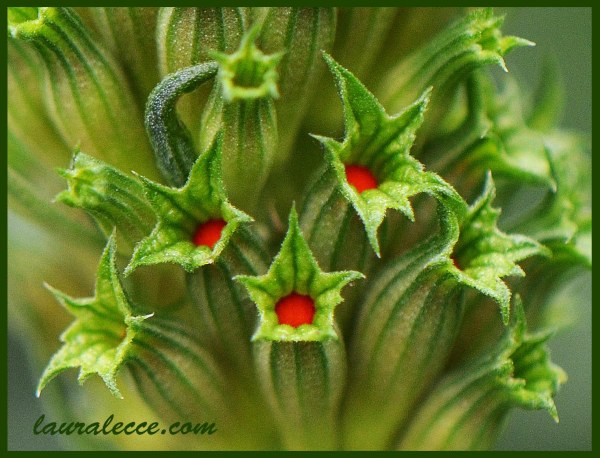
These photos are from the very unusual plant called leonotis leonurus (commonly called lion’s tail or wild dagga) native to South Africa. A very hardy perennial plant belonging to the mint family which is drought resistant, deer resistant and also used as an annual in colder climates. It forms unusual tubular flowers in clusters along the stem with newer clusters appearing at the top. The shape of the flowers are perfectly suited for pollination by sunbirds and hummingbirds, but also attracts butterflies and bees with sweet nectar inside the flowers. This plant has psychoactive compounds with similar effects to cannabis in that smoking dried leaves and flowers can give a mild calming effect (please do not try this on account of my blog!) Leonurine has also been found to have antioxidant, cardio-protective, anti-inflammatory and hypoglycemic (anti-diabetic/blood sugar lowering) properties. The unusual flowers which are commonly orange but also come in a white and yellow variety gave me some very bright and interesting photographs. Happy weekend everyone, see you in 2017!!!
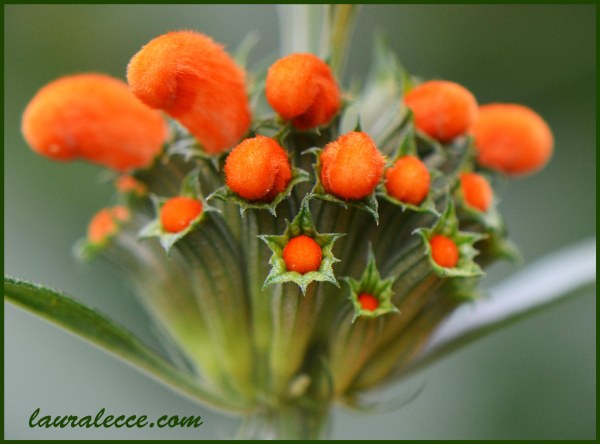
Lions Tail - Photograph by Laura Lecce
Lions Tail- Photograph by Laura Lecce

Great blue heron at sunset

Great blue heron at sunset - Photograph by Laura Lecce
Great blue heron at sunset – Photograph by Laura Lecce

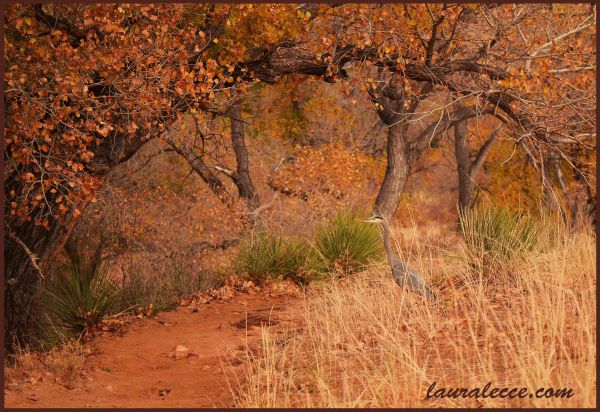
I love the warm golden colors that the setting sun has painted across this landscape. This magnificent great blue heron was photographed in Zion National Park in Utah. I have seen many herons since moving to America, and even though we have herons in Australia I never really noticed them before. I am always amazed that for such a large bird, herons are incredibly shy and skittish. No matter how slow I try to creep up they never let me get very close at all, but I have seen these birds get courageously close to some pretty massive alligators! The photo below is the original before cropping which has a very beautiful arch created by tree branches. A dry looking landscape hiding a trickling stream just behind the tree line, and a dusty red path occasionally dotted with a green firework – sometimes nature creates its very own artworks.

Heron under tree arch - Photograph by Laura Lecce
Heron under tree arch – Photograph by Laura Lecce

Friday Flower – Epidendrum Orchid

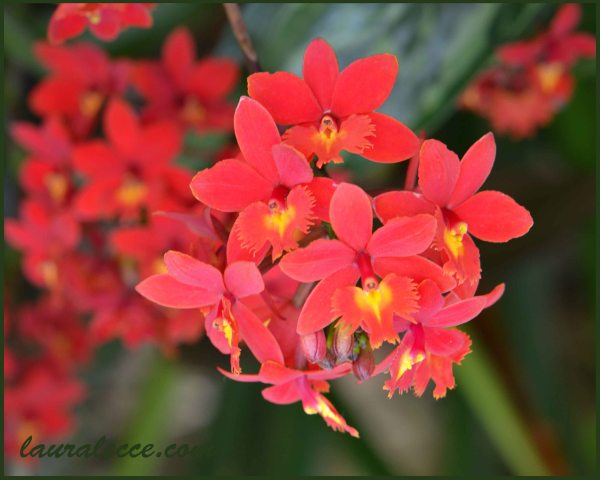
Epidendrum - Photograph by Laura Lecce
Epidendrum – Photograph by Laura Lecce

New York is currently in full Christmas swing, and so I thought a Christmas colored photo would be a great one for today. This photo is of an adorable type of orchid called an Epidendrum, and they come in a large range of beautiful colors. This photo is actually flipped upside down, as this plant grows its flower stems pointing directly up (instead of many other orchids which arch over) so the flowers actually appear upside down on the stems. This is an orchid which is quite hardy and can tolerate drier conditions than a lot of other orchids, so it will grow outside in Australia without much trouble at all. Happy weekend everyone!!!

For more orchid photos please click here.

The ones with hair

The Ones with Hair - Photograph by Laura Lecce
The Ones with Hair – Photograph by Laura Lecce

Once while sitting on a Western Australian beach, I was very amused by the appearance of a few seagulls which looked like they were wearing a black toupee. It was also funny because they were having as bad a hair day as I was and were looking quite frazzled (WA is well known for becoming increasingly windy in the afternoon). It turns out that the ones with hair are not seagulls, they are a different kind of bird called a crested tern. Obviously both gulls and terns are quite happy to have each other as company. Also, if this photo is at all representative of these populations… seagulls are lazier and prefer to sit down.

Survival against all odds

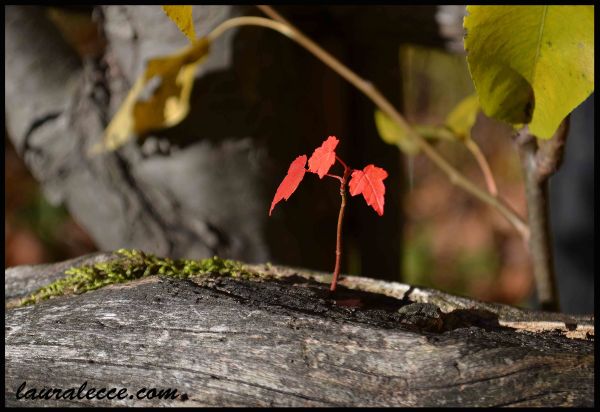
Survival against all odds - Photograph by Laura Lecce
Survival against all odds – Photograph by Laura Lecce

I came across this tiny Autumn colored tree growing in Central Park and it reminded me of a bonsai. I’ve read that the purpose of a bonsai is to evoke contemplation in the viewer. Looking at this tree, I couldn’t help but think how amazing it is that a seed managed to grow in such an unlikely place. This tree will forever have to grow against the odds, fight for the chance to survive, and I will wholeheartedly cheer it on. Why? Because I always fight for the underdog, I lend my strength to those who are overlooked, I protect people from bullies….. That is who I am!

Flower Friday – Pointleaf Manzanita

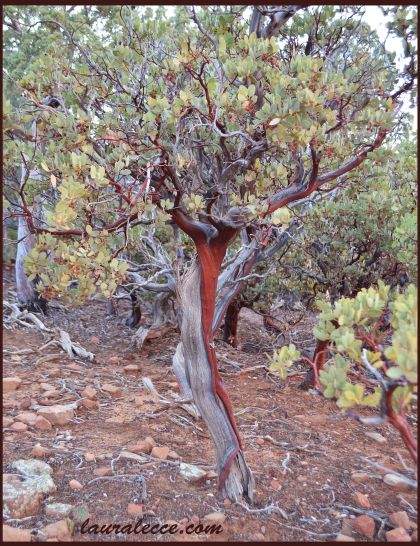
The bleeding bush - Photograph by Laura Lecce
The bleeding bush – Photograph by Laura Lecce

This post today is not so much a flower but a really interesting shrub I saw while recently hiking in Sedona, Arizona. A shrub commonly named pointleaf manzanita (Arctostaphylos pungens), manzanita meaning “little apple” in Spanish. These plants make berries (that look like little apples, hence the name) which are a food source for various wildlife in this dry and harsh environment, and are also harvested to make jam in some parts of Mexico. They have gorgeously twisted, blood-red bark and branches ending in small green leaves. Even more fascinating is that many of them are a tortuous combination of dead (grey) and live (red) parts which look as though blood is streaming down the side of the plant. It is also fitting that an area famous for its red rocks has its very own red shrubs too. Happy weekend everyone!

It wasn’t always so peaceful

It wasn's always peaceful - Photograph by Laura Lecce
It wasn’t always peaceful – Photograph by Laura Lecce

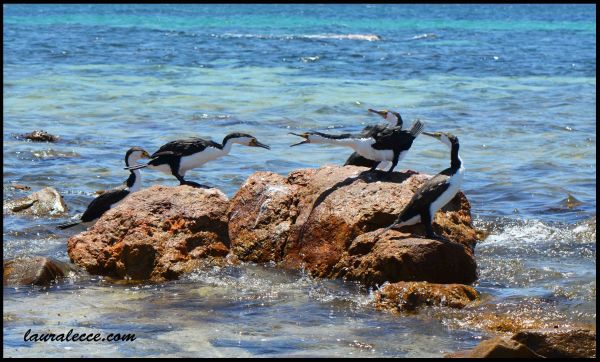
Today is an extra special Friday… the one year anniversary of my blog!!! I want to thank everyone (all of my followers) for your support which has made blogging the wonderful experience it has been so far. Today I am breaking Friday tradition, and instead I want to share with you an alternate photo of one of my earliest posts. The original photo below (click here for original post) was of a peaceful Western Australian seascape with well behaved, black and white cormorants. Todays photo above was taken just moments before that one, the cormorants squabbling over a territorial dispute involving expensive waterfront real estate. Together these photos are the perfect metaphor for how quickly life can change in a mere moment, and that no matter how ugly a current situation is, the calm will eventually arrive.

Life at Sea - Photograph by Laura Lecce
Life at Sea – Photograph by Laura Lecce

Early on in my blog I also had a post on my battle with anxiety, especially bad when I travel on airplanes (click here for post). I am proud to say that two days ago I was courageous enough to fly alone for the first time in about 10 years. It wasn’t a great experience with definite moments of panic, but I calmed myself down and I made it. I did it by myself and I can be very proud of that! So here is to the incredible changes that one minute, one hour, or one year of time can bring to someone’s life. Happy Weekend Everyone!!!

Friday – A Flower and a Fly

A Flower and a Fly - Photograph by Laura Lecce
A Flower and a Fly – Photograph by Laura Lecce

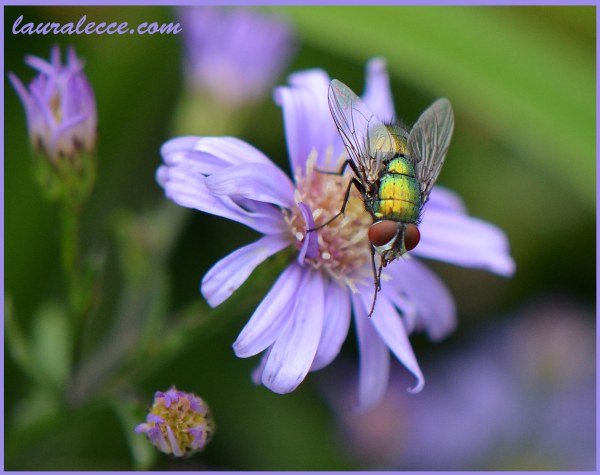
Today I present to you this fly……on a flower. This fly is called a green bottle fly because of the shiny metallic green color of its body. Flies such as these have very important uses in both forensic science and medicine. They are often the first flies to arrive at a human or animal carcass, and this is where they can begin their lifecycle – A female will lay about 200 eggs which hatch and become larvae in 1-3 days, fully developed larvae in 3-10 days, and pupal development takes 6-14 days after which an adult fly emerges. Forensic investigators can use this knowledge to approximate the length of time a deceased has been dead.

These flies (or more correctly, the maggots) are used by doctors to treat wounds which are unresponsive to conventional treatments. They eat away the dead tissue and bacteria, and also secrete antimicrobial enzymes which together prevents infection and allows healthy tissue to grow successfully. Given the increasing resistance of bacteria to known antibiotics, this may just become the medicine of the future. Sorry to give such a literal example of making your skin crawl….

Happy weekend everyone!

I’m Going Batty

Going Batty - Photograph by Laura Lecce
Going Batty – Photograph by Laura Lecce

So this was an absolute treat…. About a week ago, this furry little bum showed up on a window sill at work. Completely perplexed by this round ball of golden colored fur, it took me a few minutes to figure out that what I was actually looking at was a bat! It was so tiny, like the size of a mouse. I watched closely to make sure he was breathing (as I thought originally that he might be dead), and I wondered what circumstances he had endured to be forced to spend his daily nap on our window sill. The poor little bugger looked so cold that I wished I could have given him a warm cuddle. I regularly checked on this little golden fur ball through out the day, hoping I would eventually see him fly off. Unfortunately, sometime as the sun was setting I missed the takeoff moment, but hoped he would have found his friends. This tiny little guy is very different from the bats I’m used to back in Australia. Some of our bats are much larger and are actually named flying foxes (although we have about 75 species of bats of all different sizes!). Flying foxes are large black bats with a mane of golden fur around their necks, they are seen throughout Sydney. The Royal Botanic Gardens in Sydney was home to a very large colony of flying foxes (over 20,000 of them at times) which took up residence on few leafless trees, completely destroyed to accommodate their numbers. They were incredibly loud, constantly squabbling as they tried to find sleeping room on those poor trees. They have since moved on, but it was always an amazing sight to see and hear so many bats in one place!

Friday Flower – My Bleeding Heart Vine

My Bleeding Heart Vine - Photograph by Laura Lecce
My Bleeding Heart Vine – Photograph by Laura Lecce

This adorable little red flower is from a Bleeding Heart Vine (Clerodendrum thomsomiae), a native to tropical west Africa. This plant utilizes two reproductive strategies, dichogamy and herkagomy which mean that the stamens (male reproductive parts) ripen at a different time and are spatially separated to the pistil (female reproductive part), thus ensuring that this plant cannot self pollinate. Instead, the hard work is accomplished by butterflies and hummingbirds which spread the pollen to other plants. This also means that the genetic diversity of this plant is increased through combining the genes of separate plants, providing a higher chance of adaptation and evolutionary survival. Too much science for a Friday? In that case, happy weekend everyone!