Bad Omens

Black Crow - Photograph by Laura Lecce
Black Crow – Photograph by Laura Lecce

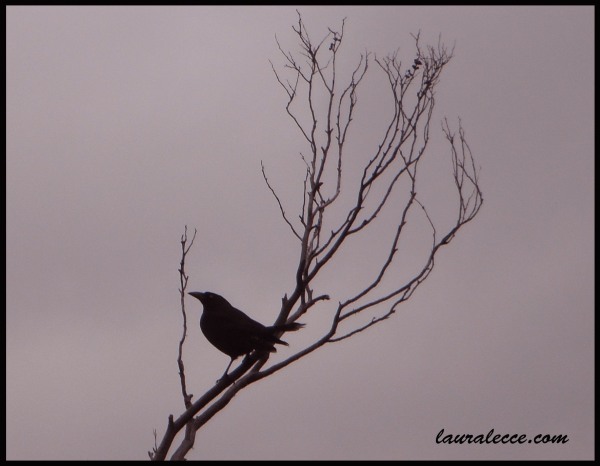
If crows are a bad omen, then my life must be terrible! Having done a fair bit of driving through various parts of Australia in quite a few different states, one major thing in common is that crows are everywhere. Supposedly they can be an omen for bad luck, good luck, health, wealth, magic, change and death. Death is the one that makes the most sense, since whenever you see roadkill in Australia (which can be frequent when driving on more remote highways) you will always see crows crowding around the carcass sharing in a meal. It is a bit eerie to know that an animal relishes in death for its survival, but it is also nice knowing that since death must occur, it is great that it feeds into new life.
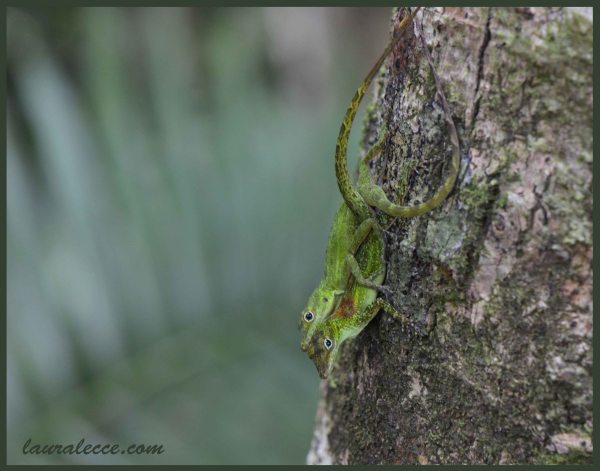
Cuddling Lizards

Cuddling Lizards - Photograph by Laura Lecce
Cuddling Lizards – Photograph by Laura Lecce

This beautifully intimate photograph was taken on a walk through El Yunque National Forest in Puerto Rico, the only tropical rainforest in the United States National Forest System. This moment was a particularly special one for me, as it was the first (and only) time I have seen lizards mating (and I have seen my fair share of lizards!). I was more careful not to disrupt their mating than I was about the photo, as the last thing I wanted was for these little beauties to miss the chance at making more gorgeous lizards. The actual walk that I was on was to see a waterfall. However, because I spent so much time photographing the lizards along the way, I never actually made it to the waterfall, as I would have missed my flight (but I saw so many lizards along the way, that I wasn’t even a little disappointed!).

For more posts on lizards click here.

A Cheeky Pair

Rainbow Lorikeets - Photograph by Laura Lecce
Rainbow Lorikeets – Photograph by Laura Lecce

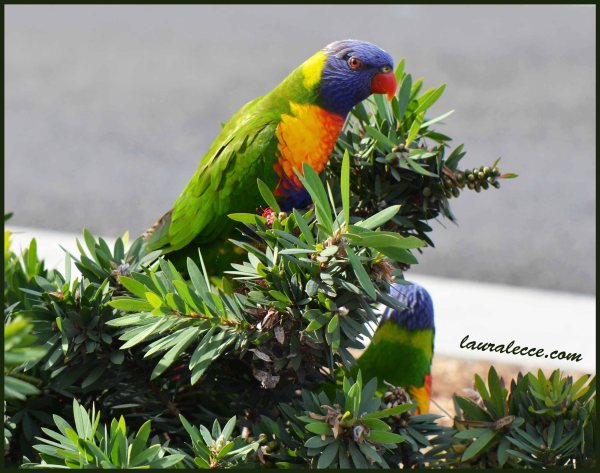
I had forgotten what it was like in Australia waking up to such distinctive bird calls. Those which I had listened to my entire childhood, but only recently paid attention to. The earliest birds are the kookaburras (click here for post) with their loud and projecting laughs, mocking the sun as it rises. They wake the cockatoos, who show their distain with long and piercing screeches. Next are the large flocks of rainbow lorikeets (in the photo) which can be heard having territorial squabbles across the trees with their sharp and angry chirps. They are one of Australia’s most colorful birds, and like other parrots, they know how to be noisy! They mostly travel in pairs, and once paired will be monogamous for life. When feeding in a flock, the male will threateningly hop around his partner while she feeds to make sure no other birds interrupt her meal. They eat fruit, pollen and nectar, mostly from native Australian trees and shrubs such as the eucalyptus, and the bottle brush (Callistemon) seen in this photo. It’s hard to be angry about being woken up early when the birds are as pretty as these ones!

Who Said Toads Were Ugly?

Golden Eyed Toad - Photograph by Laura Lecce
Golden Eyed Toad – Photograph by Laura Lecce

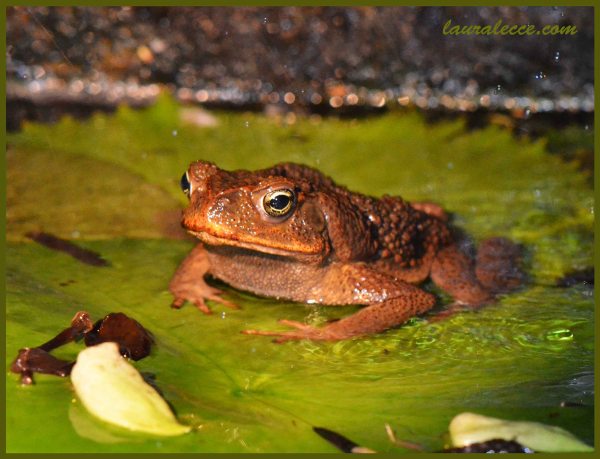
If you can find it in your heart to look beyond the belly fat and brown pimply skin you will see the golden glistening eyes of this glorious toad. Living in a luxurious resort in St Lucia, this toad was clearly the queen of this pond, each night posing proudly atop the lilies. St Lucia is one of the homes of the cane toad (Rhinella marina) also known as the giant neotropical toad. On average they grow to about 10-15cm (4-6 inches), but have been recorded as large as 38cm (15 inches) and weighing 2.65kg (5.8lb). This toad was introduced into northern Australia as a predator to combat the beetles which were eating sugar cane crops. This turned out to be a futile endeavor since the beetles kept to the top of the sugar canes and the toads have poor climbing skills, so instead the toads outcompete many Australian reptiles and frogs for food which is easier to access. So as beautiful as they may be under that brown pimply skin, they should have stayed at home.

Orangutan Sanctuary

Orangutan - Photograph by Laura Lecce
Orangutan – Photograph by Laura Lecce

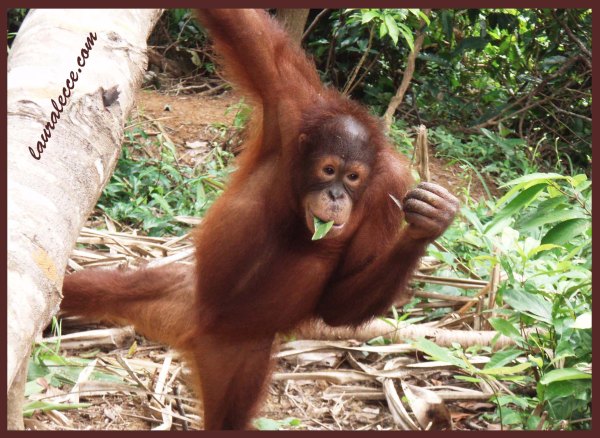
One of my most memorable wildlife experiences was visiting an orangutan sanctuary at the Rasa Ria Nature Reserve in Kota Kinabalu, East Malaysia. This reserve provides protected space where orphaned orangutans are rehabilitated and hopefully reintroduced into their natural habitat. Here the orangutans are taught the skills they need to eventually live an independent life. Orangutans are native to Indonesia and Malaysia and are currently found only in the rainforests of Borneo (island shared by Malaysia, Indonesia and Brunei) and Sumatra (Indonesian island). Watching juvenile orangutans is such a heartwarming pleasure. They are intelligent, playful, inquisitive and tactile animals, that it brings sadness to remember that they are at the sanctuary because of poaching and deforestation. Though it is because of these sanctuaries that people are made aware, educated and hopefully interested in actively saving these precious animals.

To see my other posts with primates click here.

Pod of Pelicans

Pod of Pelicans - Photograph by Laura Lecce
Pod of Pelicans – Photograph by Laura Lecce

Pelicans can be found in many countries around the world, but none of them quite compare with the strikingly beautiful, black and white feathered, pink billed features of the Australian Pelican. For a medium bodied pelican, it actually possesses the largest bill size of any bird in existence. Quite common in Australia, these birds are a icon of the Australian coast. This photo was taken in Western Australia, and this pod of pelicans are patiently waiting for a feed from a local fisherman who is cleaning his recently caught fish to the right of this photo. These graceful birds which are usually quite polite and not overly aggressive for their size, feed on fish, insects, yabbies and shrimp, but should not be underestimated, for even small dogs have been swallowed by these large billed birds.

Click here for other posts from Western Australia.

Teddy Bear Crab

Teddy Bear Crab - Photograph by Laura Lecce
Teddy Bear Crab – Photograph by Laura Lecce

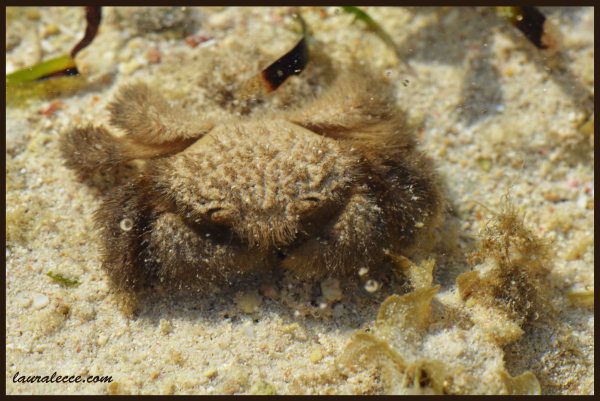
This furry little creature is called a Teddy Bear Crab because its body and legs are covered in fur (setae). You can imagine my surprise to find a crab covered in fur, but there are actually many different species of this little crab. I took this photo in a very shallow reef off the coast of Vanuatu (a pacific island nation about 3 hours flight from the east coast of Australia). This shallow reef was partly exposed each day at low tide and was a great place to observe and photograph many weird and wonderful sea critters. This particular crab is covered in fur to trap sand and sediment which help it camouflage itself on the sandy floor. Some species of this crab have been seen carrying around mini stinging anemones in their two front claws to present to any potential threats it might encounter. A very ingenuitive way of forcing other marine creatures to be portable body guards.

For other posts on underwater creatures click here.

Clownfish Quirks

Clownfish Quirks - Photograph by Laura Lecce
Clownfish Quirks – Photograph by Laura Lecce

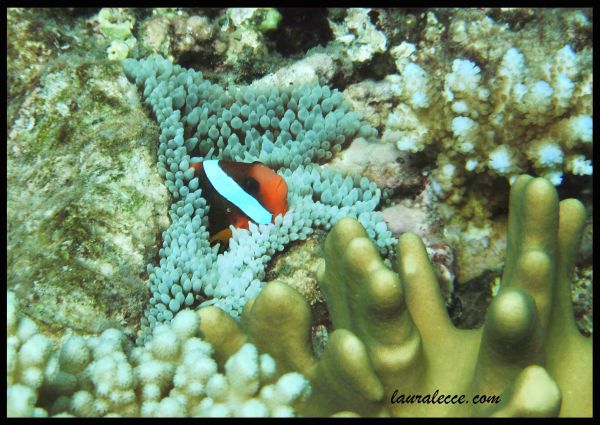
So these little fish are more amazing than I ever knew. They live amongst anemone tentacles protected by a layer of mucous that covers their body. This symbiotic relationship means that clownfish are protected from predators, and get left over scraps of food from the anemone. In exchange the clownfish drive off intruders and keep the anemone clean of parasites. Interestingly all clownfish are born male, but the largest clownfish in a group is female. If she dies, her mate increases in size and transforms into a female and subsequently mates with the next largest male. It is thought that because adult clownfish rarely stray from their homes, this evolutionary trait ensures that there is always a female and a male in the small group.

For my other post on clownfish Click here.

Mum and Bub Pademelon

Mum and Bub Pademelon - Photograph by Laura Lecce
Mum and Bub Pademelon – Photograph by Laura Lecce

Sorry to inundate you with such cuteness on Monday morning, but this photo was too adorable to not to share. This pademelon youngster following its mother around is about 6-8 months of age. Interestingly, mum is likely to already have another joey in the pouch. The reproductive cycle is a bit complicated, but stick with me on this. When mum gives birth to a new born (after 3 weeks gestation) the little jelly bean climbs up her tummy and into the pouch where it lives for the next 6 months. As soon as the baby is born, mum is immediately receptive to mating again. If she does and the egg is fertilized, it is put into a state of suspended animation until the current joey exits the pouch. When the pouch is vacated, the blastocyst continues to develop and the newest baby is born. It then climbs into the pouch and attaches itself to a teat for milk. The youngster outside the pouch will still put its head into the pouch for milk (where it meets its younger sibling). Even more interesting is that mum is making newborn milk for the little joey, and from a separate teat, toddler milk for the older sibling, and has a blastocyst in suspended animation as a backup. Talk about a very efficient parenting strategy!

For my other post about pademelons click here.

Garden Orb Weaver

Garden Orb Weaver - Photograph by Laura Lecce
Garden Orb Weaver – Photograph by Laura Lecce

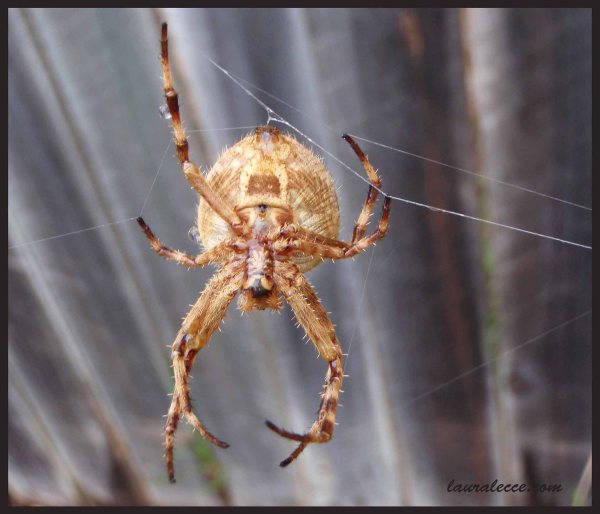
I thought it about time for another spider, also a very common species on the east coast of Australia. Don’t worry, just like the St Andrews Cross spider, this is also one of Australia’s friendly spiders which wont kill you. The garden orb weaver is a beautiful arachnid, easily identified by its signature plump belly. It spends the early evening making a magnificent web and spends the night sitting in the center, waiting for an unsuspecting winged insect to fly into this brilliantly formed trap. During the day, the spider will leave the web and tuck itself away in a rest spot, often a leaf very close to edge of the web. If you are walking around and get a face full of spider web, its usually from these guys, thankfully its most often without the spider on your face too!