Friday Fungi – A Mound of Magnificent Mushrooms

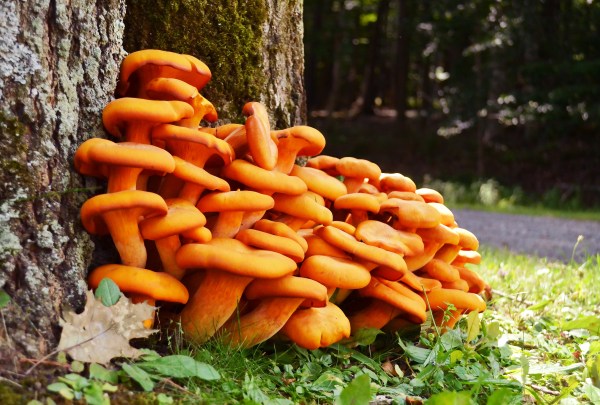
A Mound of Magnificent Mushrooms – Photograph by Laura Lecce

This giant family of mushrooms photographed in Rochester NY, have prospered by setting themselves up in this ideal location. Nestled at the foot of this tree, on the shady side of town, where they don’t have to deal with any hot sun. Even so, each mushroom still fights for it’s fair share of light by either climbing higher or further out than its relatives. They get their nutrients from whatever leaf litter that falls from the tree and degrades into the rich soil below. They will each make millions of microscopic spores in the gills hidden underneath their caps, and eventually release them into the wind to find a new home next year.

For other mushrooms please click here.

Too close for comfort

Too close for comfort – Photograph by Laura Lecce

By that I mean my comfort! This chipmunk was way too curious for my liking and I was worried he was going to jump on my head! He kept getting so close my camera couldn’t focus and I had to keep backing up to take a photo. As a general rule I prefer not to interact with wildlife so that I can photograph them behaving naturally in their environment, but sometimes wildlife can’t help but get a little too curious!

Friday Fungi

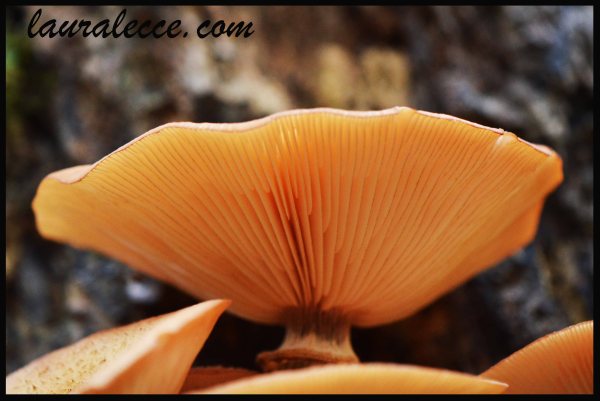
Golden Fungi – Photograph by Laura Lecce

This picture perfect fungi was spotted while hiking in Quebec. I am always on the lookout for a beautiful mushroom to photograph, which usually results in me lying on the ground with my camera, this one however was on the side of a tree. I have yet to see a cartoon-style red toadstool with white spots which are common in the UK,  but hopefully one day. Fungi are a fascinating group of living organisms which behave differently to plants. They begin from a tiny microscopic spore which needs nutrient rich soil to grow, as it cannot make energy from chlorophyll like plants. Unlike plants and animals which use mostly cell division to grow, a slow and energy consuming process, mushrooms grow quite fast. Their ability to grow fast is because their cells balloon in size by drawing in large amounts of liquid, and is also why mushrooms need to grow in wet and humid areas. They are essentially a water balloon of about 90% water, and can be easily dehydrated and rehydrated for storing and cooking. Needless to say not all mushrooms are safe to eat, so never touch or eat wild mushrooms unless you know for sure that it is a safe kind of mushroom to eat.

For other mushrooms, click here.

Two Glorious Geese

Two glorious geese – Photograph by Laura Lecce

I did not see these Canadian geese in Canada but in Yellowstone National Park. It seems the name is misleading as I have seen a lot of these geese in the US! They even nest in Central Park in Manhattan, and in the Spring you will see chicken-sized, fluffy babies following their parents around. These two posed so perfectly that they deserved to have their photo taken.

For other posts from Yellowstone National Park, please click here. This post is dedicated to my Canadian friends.

Acadia in color

Acadia in color – Photograph by Laura Lecce 

I certainly didn’t grow up with Autumn colors like this in Sydney, which is why I am in such awe when I get the chance to see them now. Acadia National Park was the perfect destination for a weekend getaway to see peak foliage colors painted across the most stunning scenery. This glorious day was the ideal combination of warm golden sun and chilly air – the best hiking weather. Climbing the steep Beehive Trail to the top of this small mountain provided an incredible vantage point with which to admire Mother Nature’s artwork. As a person who lives for color, even I could not have imagined that this many brilliant and intense colors could exist in a single landscape. Just incredible!

A grizzly and her cubs in a field of flowers

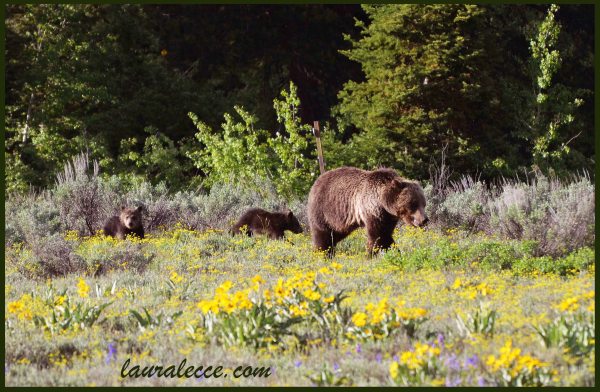
A grizzly and her cubs in a field of flowers – Photograph by Laura Lecce

Life doesn’t get much better than this. Watching a mamma grizzly make her way slowly through a field of yellow wildflowers while her two cubs run around her. This picture was taken in Spring in Teton National Park. There were quite a few female grizzlies each with two beautiful and bouncy cubs. Predictably they took the same route every day, so on each day you could catch a glimpse of them making their way through this field. I learned that a grizzly can be distinguished from other bears because of the hump on it’s back above the shoulders. They are so much bigger than I imagined, and every time I saw a bear on this trip I would forget to breathe. You really feel like you are in the presence of a magnificent and truly special animal. What a truly wonderful experience.

Friday Flower – Balsamroot with a backdrop of Tetons

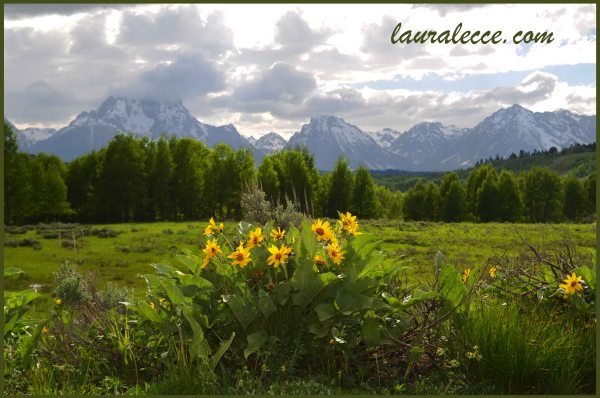
Wildflowers with the Tetons – Photograph By Laura Lecce

These beautiful, bright and sunny wildflowers are known commonly as balsamroot, or scientifically called Balsamorhiza. They are a member of the sunflower family and make a stunning foreground for a photo of the Teton mountain range. They are a golden flag for the Spring season and provide food for many grass and plant eating animals such as deer, elk, pronghorn and bighorn sheep. There were many grassy valleys and hillsides inundated with large tufts of golden flowers, and they appear in so many of my wildlife photos. They wildflowers really brightened up my trip and I hope they brighten up your weekend, have a great one everyone!

Friday Flower – A close look at a zinnia

Zinnia close up – Photograph by Laura Lecce

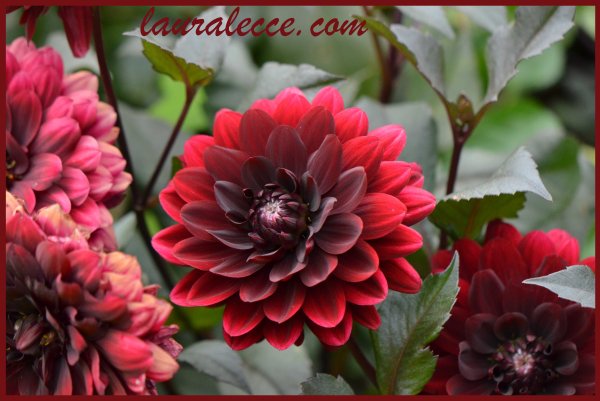
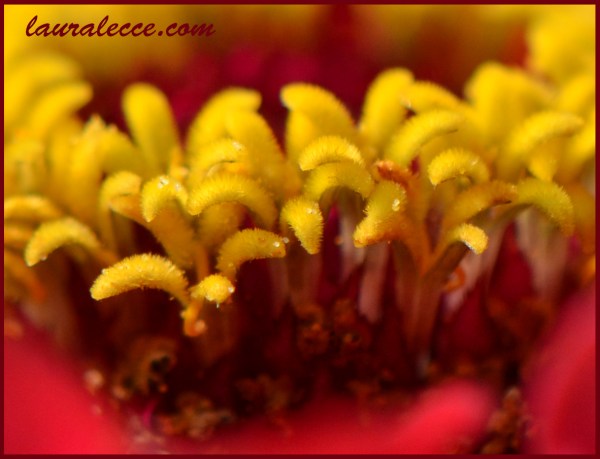
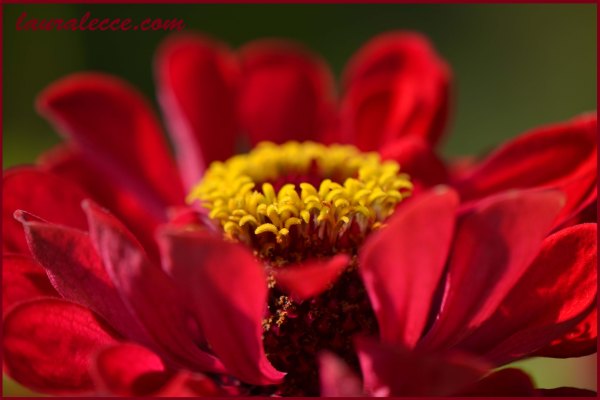
Sometimes it’s more interesting to look at something familiar from a different perspective to gain renewed appreciation. Have you ever looked at a zinnia this close before? I discovered a tiny forest of golden furry trees arranged in a perfect circle surrounded by a bed of brilliant red petals. Each yellow tree has a trunk filled with nectar that attracts bees, butterflies and moths. Each visitor gets a secret powdering of yellow pollen to transport to subsequent flowers, unknowingly becoming a pollen postal service. I go the garden to relax, unwind and refresh my mind, and while everything around me may seem tranquil, it is in fact the opposite – each and every flower, every insect and every plant is very hard at work.

Red zinnia – Photograph by Laura Lecce

Dinner with a Canadian Beaver

Canadian Beaver – Photograph by Laura Lecce

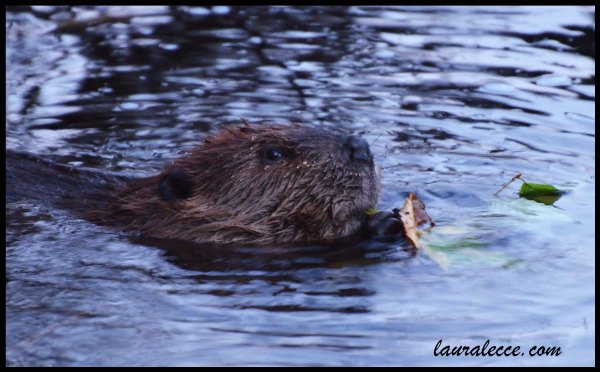
I never felt so humbled as I was on this day when a Canadian beaver swam past me down the river dragging his dinner, and instead decided to swim back towards me, plant himself at the edge of the river bank and enjoy his dinner with me. This beaver sat so close to me that I could hear the branches being crunched by his strong beaver teeth as he fed them into his mouth like a straw. Then when he got to the end of the branch he would try to shove all the leaves into his mouth at once, cheeks bulging and continued chewing. The whole time he was watching me watching him and seemed just as curious about me as I was about him. I managed to get many good photos of him in the waning light as the sun was setting. My trip to Parc national de la Jaques-Cartier was the highlight of my trip thanks to this beaver, although I also loved the old part of Quebec City. Eating a beaver tail was the second highlight, and for those of us who aren’t Canadian, don’t worry, its not a real beaver tail but a yummy, fried, flat dough covered in whatever deliciously sweet toppings you desire.

For other Canadian posts please click here.