Hawk eating pigeon for lunch

Hawk eating pigeon for lunch - Photograph by Laura Lecce
Hawk eating pigeon for lunch – Photograph by Laura Lecce

Living in Manhattan, Central Park is my wilderness. I often see squirrels, ducks, geese, raccoons and turtles, but this weekend I was treated to something extra special. This stunning hawk who at first I thought was injured or had been in a fight (due to the bunch of feathers all over the ground around him), had in fact caught a pigeon for lunch and was in the process of shredding it. This red-tailed hawk, along with a few others often hunt in central park, but this is the first time I got to see this magnificent bird at  close range. Female red-tailed hawks grow larger than their male companions, and both are known to be monogamous in their relationship. Eggs and chicks are primarily looked after by the female hawk while her male partner provides them with food. It sounds like she has him well trained.
Flower Friday – Echinacea

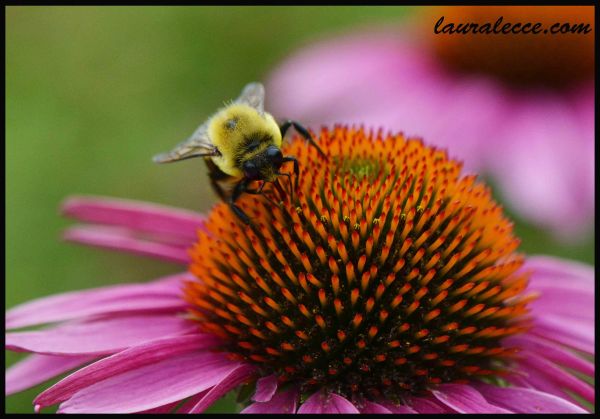
Echinacea with a Bee - Photograph by Laura Lecce
Echinacea with a Bee – Photograph by Laura Lecce

These lovely, pink, cheerful flowers are just one type of Echinacea, in which there are 9 different species. I took these photographs in the Spring of last year and on this particular day the bees were in out in overwhelming numbers. This made for some easy macro photography of these busy bees because all I had to do was point my camera at a flower and click. Echinacea may sound familiar as it is a herb said to have numerous health benefits such as cold prevention, boosting the immune system, anti-inflammatory effects, mental health improvement and many more. However, even though there are some studies which may show it is has beneficial effects, there are others which say that these effects are yet unfounded. Regardless of whether Echinacea is good for us, it is definitely beneficial to your garden to grow such happy looking flowers which encourage the bees to come and visit.

Echinacea flowers make the bees happy – Photograph by Laura Lecce

Communicating with a Squirrelfish

Squirrelfish wants to be friends - Photograph by Laura Lecce
Squirrelfish wants to be friends – Photograph by Laura Lecce

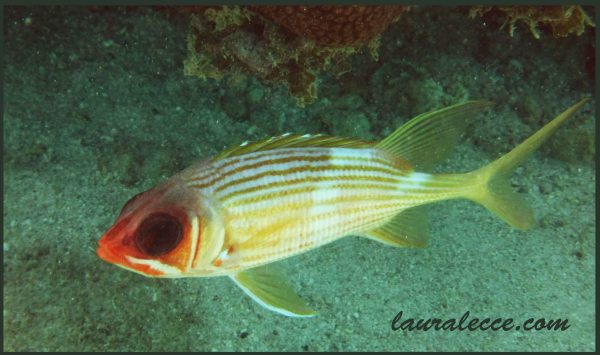
This beautiful Squirrelfish was spotted (with quite a few others) whilst recently snorkeling in Jamaica. These fish chose a home amongst the corals and rock crevices which they become very territorial about. They get incredibly defensive when someone infringes upon their space and will issue warnings by grunting and making other high pitched noises (which I obviously cannot hear underwater). For those of us who are hard of hearing, this fish also threateningly raised the spines along its back to let me know that I got too close. Once it realised I was a friend it went back to happily swimming laps around the coral and posing for some more friendly photos too. Because this fish stays close to its territory all the time it meant that I could find the exact same fish in the same location the next day. Click here for other underwater posts.

Squirrelfish with attitude - Photograph by Laura Lecce
Squirrelfish with attitude – Photograph by Laura Lecce

Flower Friday – Edible Dahlias

Pink Dahlia - Photograph by Laura Lecce
Pink Dahlia – Photograph by Laura Lecce

I’ve posted some interesting facts about Dahlias on my blog previously (click here), but did you know they’re also edible? You can eat both the flowers and the tubers (bulbs/roots), with different types having different flavors and some varieties being tastier than others. Another very gorgeous and also potentially yummy addition to your garden!

Check out James Wong’s very interesting post about edible dahlias here.

Happy weekend everyone!

A Happy Pig

My Glorious Mud Bath - Photograph by Laura Lecce
My Glorious Mud Bath – Photograph by Laura Lecce

Lets start 2017 off with the happiest pig I’ve ever met who lives in a swamp in New Orleans. Her name is Oreo because her dark head and rump are separated by a cream colored middle. I met her on an alligator swamp tour in which I did not see any alligators. This is expected in winter months as the weather gets colder, alligators will go into brumation (which is when they slow down metabolic activity and lie submerged in their burrows only surfacing to breathe). This makes for a very happy swamp pig who can now safely wade through the mud without having to be afraid of becoming an alligators lunch. She even gave me her “sexy eyes” sultry pose for one of my photos! Here’s to a happy and carefree 2017 for everyone!

My Sultry Pose - Photograph by Laura Lecce
My Sultry Pose – Photograph by Laura Lecce

Flower Friday – Leonotis leonurus

Leonotis leanurus - Photograph by Laura Lecce
Leonotis leanurus – Photograph by Laura Lecce

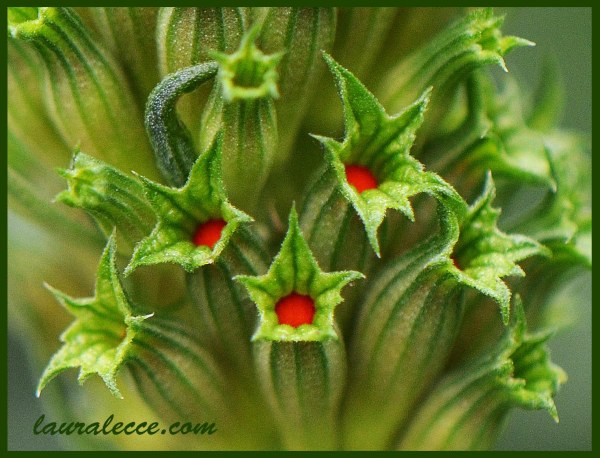
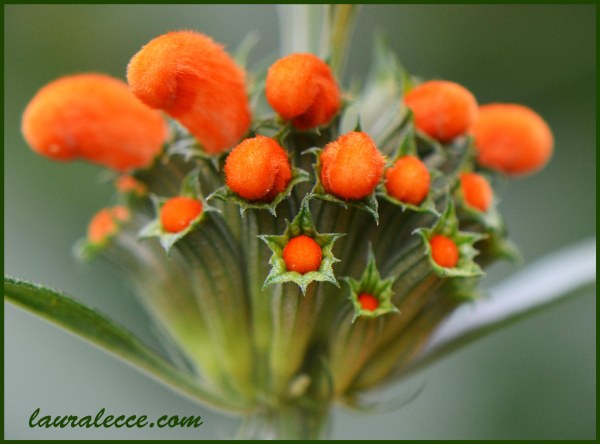
These photos are from the very unusual plant called leonotis leonurus (commonly called lion’s tail or wild dagga) native to South Africa. A very hardy perennial plant belonging to the mint family which is drought resistant, deer resistant and also used as an annual in colder climates. It forms unusual tubular flowers in clusters along the stem with newer clusters appearing at the top. The shape of the flowers are perfectly suited for pollination by sunbirds and hummingbirds, but also attracts butterflies and bees with sweet nectar inside the flowers. This plant has psychoactive compounds with similar effects to cannabis in that smoking dried leaves and flowers can give a mild calming effect (please do not try this on account of my blog!) Leonurine has also been found to have antioxidant, cardio-protective, anti-inflammatory and hypoglycemic (anti-diabetic/blood sugar lowering) properties. The unusual flowers which are commonly orange but also come in a white and yellow variety gave me some very bright and interesting photographs. Happy weekend everyone, see you in 2017!!!

Lions Tail - Photograph by Laura Lecce
Lions Tail- Photograph by Laura Lecce

Psychedelic Clams

Psychedelic Clam - Photograph by Laura Lecce
Psychedelic Clam – Photograph by Laura Lecce

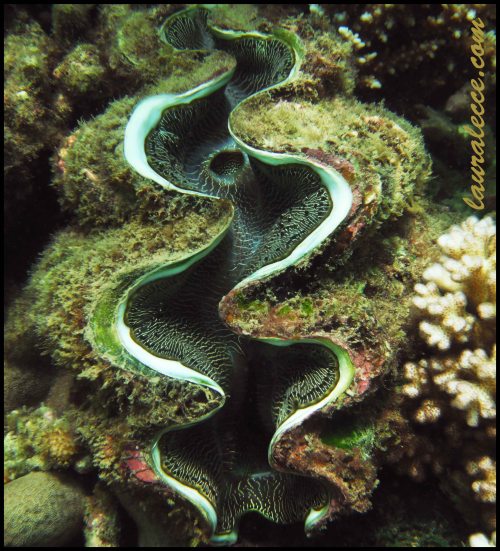
This gorgeous and very large clam was photographed while swimming off a beach on Fitzroy Island, Australia. This beautiful island is situated just off the coast of Queensland about a 45 minute boat ride from Cairns. It is surrounded by coral reef that is part of the Great Barrier Reef Marine Park, where you can see many different corals, clams, fish and even turtles. Clams are incredibly fascinating creatures especially in regards to their life cycle and reproductive habits. They are born male and remain so for the first few years of life and produce sperm to reproduce. Once mature they also develop ovaries and produce eggs making them hermaphrodites. To maintain genetic diversity, clams living in the same area will spawn at the same time. Clam spawning, along with many corals takes place when sea temperatures rise and the moon is at the correct phase. Once spawning has begun they simultaneously release reproductive pheromones telling other nearby clams to spawn. First they release sperm which gets moved away by the current (hopefully to meet another clams eggs), and then they release eggs (to hopefully meet another clams sperm). After fertilization takes place the baby clam passes through a mobile larval stage (which sadly many do not survive), before finally settling on a permanent home and growing into the beautiful, colorful clams that we see amongst the corals.

For other underwater posts, please click here.

Great blue heron at sunset

Great blue heron at sunset - Photograph by Laura Lecce
Great blue heron at sunset – Photograph by Laura Lecce

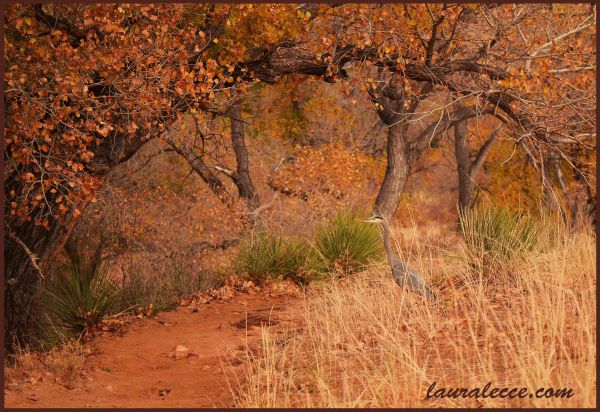
I love the warm golden colors that the setting sun has painted across this landscape. This magnificent great blue heron was photographed in Zion National Park in Utah. I have seen many herons since moving to America, and even though we have herons in Australia I never really noticed them before. I am always amazed that for such a large bird, herons are incredibly shy and skittish. No matter how slow I try to creep up they never let me get very close at all, but I have seen these birds get courageously close to some pretty massive alligators! The photo below is the original before cropping which has a very beautiful arch created by tree branches. A dry looking landscape hiding a trickling stream just behind the tree line, and a dusty red path occasionally dotted with a green firework – sometimes nature creates its very own artworks.

Heron under tree arch - Photograph by Laura Lecce
Heron under tree arch – Photograph by Laura Lecce

Friday Flower – Epidendrum Orchid

Epidendrum - Photograph by Laura Lecce
Epidendrum – Photograph by Laura Lecce

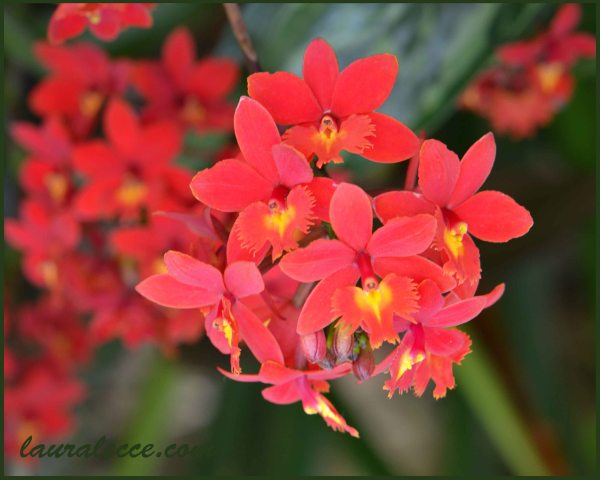
New York is currently in full Christmas swing, and so I thought a Christmas colored photo would be a great one for today. This photo is of an adorable type of orchid called an Epidendrum, and they come in a large range of beautiful colors. This photo is actually flipped upside down, as this plant grows its flower stems pointing directly up (instead of many other orchids which arch over) so the flowers actually appear upside down on the stems. This is an orchid which is quite hardy and can tolerate drier conditions than a lot of other orchids, so it will grow outside in Australia without much trouble at all. Happy weekend everyone!!!

For more orchid photos please click here.