Mum and Bub Pademelon

Mum and Bub Pademelon - Photograph by Laura Lecce
Mum and Bub Pademelon – Photograph by Laura Lecce

Sorry to inundate you with such cuteness on Monday morning, but this photo was too adorable to not to share. This pademelon youngster following its mother around is about 6-8 months of age. Interestingly, mum is likely to already have another joey in the pouch. The reproductive cycle is a bit complicated, but stick with me on this. When mum gives birth to a new born (after 3 weeks gestation) the little jelly bean climbs up her tummy and into the pouch where it lives for the next 6 months. As soon as the baby is born, mum is immediately receptive to mating again. If she does and the egg is fertilized, it is put into a state of suspended animation until the current joey exits the pouch. When the pouch is vacated, the blastocyst continues to develop and the newest baby is born. It then climbs into the pouch and attaches itself to a teat for milk. The youngster outside the pouch will still put its head into the pouch for milk (where it meets its younger sibling). Even more interesting is that mum is making newborn milk for the little joey, and from a separate teat, toddler milk for the older sibling, and has a blastocyst in suspended animation as a backup. Talk about a very efficient parenting strategy!

For my other post about pademelons click here.
Flower Friday – Euphorbia Didieriodes

Euphorbia Didieriodes - Photograph by Laura Lecce
Euphorbia Didieriodes – Photograph by Laura Lecce

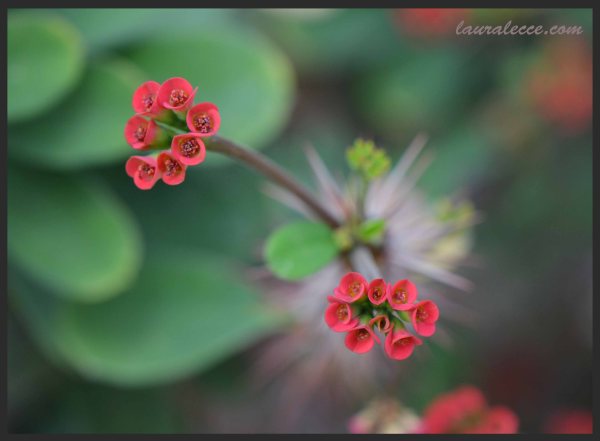
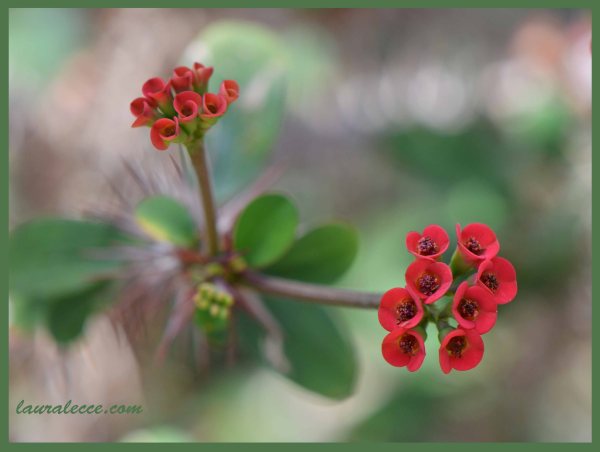
Last month at the New York botanic gardens I went to see the orchid display, when in fact these non-orchid photos turned out to be my favorites. In the dessert section was this beautiful plant native to Madagascar called Euphorbia didieriodes. The plant itself isn’t widely known, and I found little information on it, although other Euphorbias are common house/garden plants. I love these photos mainly because it surprised me that such delicate, cute little red flowers were poking out of a formidably thorny plant!

Happy weekend everyone!

Euphorbia Didieriodes Flower - Photograph by Laura Lecce
Euphorbia Didieriodes Flower – Photograph by Laura Lecce

What a Poser

What a Poser - Photograph by Laura Lecce
What a Poser – Photograph by Laura Lecce

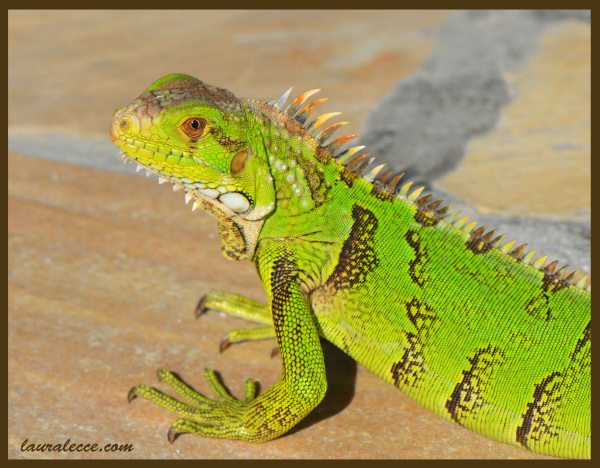
This stunningly beautiful reptile finds its home in a resort in Aruba, a beautiful island in the Caribbean. Actually I was surprised and delighted to find that many iguanas use the resort pool, and surrounding display rocks for their own personal sunning spots. Even more relaxed than the tourists on vacation, these iguanas are so accustomed to having people around them, that they were most obliging to model for some close up portrait photos.

Underwater Castle

Underwater Castle - Photograph by Laura Lecce
Underwater Castle – Photograph by Laura Lecce

This small coral structure looks like a beautiful underwater castle. It is a hard coral which is home to millions of teeny tiny individual polyps in a castle constructed out of calcium carbonate. Other likely residents within this castle are single-celled algae. The algae use energy from the sun to make sugars and fats which they share with the coral allowing it to grow faster. The coral animals also make waste which feeds the algae. Together they make a very large and happy family of teeny residents in a beautiful castle. They even have a blue Christmas tree worm as a pet in the yard!

St Andrews Cross Spider

St Andrews Cross Spider - Photograph by Laura Lecce
St Andrews Cross Spider – Photograph by Laura Lecce

Not necessarily an image you want with your leisurely morning coffee whilst browsing your WordPress reader (sorry for that). This spider is just one of the species under the genus Argiope which are known for the striking colors on their abdomen. A. keyserlingi and A. aetherea are found in Australia and we call them St Andrews Cross spiders because they sit in the very center of the web with pairs of legs together in an X shape. They also often incorporate a much larger X across the web with silk (part of this can be seen in the bottom left of this photo). Rest assured, this is one of Australia’s friendly spiders which wont kill you     😉

Capuchin Madness

It takes time to be old and wise - Photograph by Laura Lecce
It takes time to be old and wise – Photograph by Laura Lecce

I was lucky enough to encounter many Capuchin monkeys in Costa Rica. After watching them for some time, I was able to observe some of their relationships and behaviors. In the first image, I had clearly met one of the more senior and respected members of the group. This individual was happiest observing the humans that were observing him, and was quite content in sitting back and allowing the other younger capuchins to cause a raucous.

The Coast is Clear - Photograph by Laura Lecce
The Coast is Clear – Photograph by Laura Lecce

They often moved together as large family groups, and when they did it was like a tornado moving through the trees. At one point they needed to cross a road, and before letting the mums and bubs exit the safety of the trees, they sent out scouts (pictured in the second image) to make sure the coast was clear. Once the scouts gave the all clear, monkey after monkey came flying out of the trees to scurry across the road and back into the jungle. Some of their leaps from tree to tree were incredibly far and seemed very dangerous, but they were completely confident and surefooted.

Caught Making a Mess - Photograph by Laura Lecce
Caught Making a Mess – Photograph by Laura Lecce

The monkey pictured in this last photo was caught making quite a mess with the little fruits hanging from this palm tree. Surely a source of food for these cuties, but at times it looked like it was having more fun throwing the fruits to the ground than actually caring to eat them. I think their cute little faces easily fool humans into thinking they are very friendly, but in contrary they can be quite aggressive and territorial and wont hesitate to flash some pretty sharp canines if you get too close.

Flower Friday – Dahlia

Dahlia - Photograph by Laura Lecce
Dahlia – Photograph by Laura Lecce

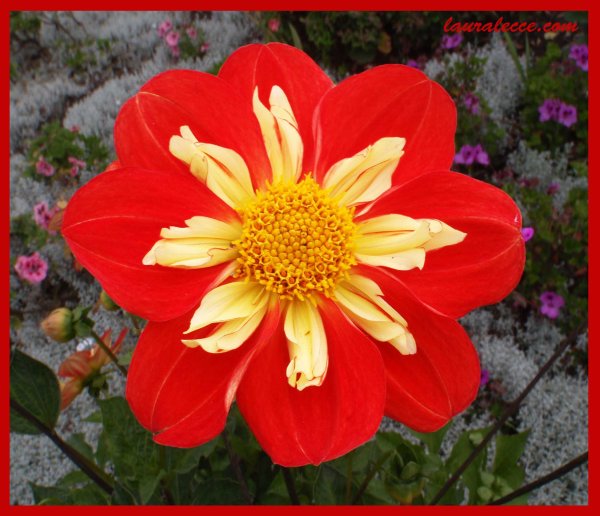
When I took this photo, I never imagined this was actually a dahlia, although now that I look at the buds and leaves more closely it makes sense. The dahlias my granddad used to grow always looked like giant pompoms (which is correctly spelt pompon in French, but was misheard as pompom by the English). Anyways, back on topic… dahlias have such a large array of variations because unlike most other plants which have two sets of chromosomes, they actually have eight! This allows for a multitude of genetic combinations and contributes to the wide diversity seen amongst these lovely flowers. Have a bright and cheery weekend everyone!

Intimate Acrobatics

Intimate Acrobatics - Photograph by Laura Lecce
Intimate Acrobatics – Photograph by Laura Lecce

I love this image of two butterflies because to me it looks as though the pattern and coloration on their wings is as if created with colored pencils. It has a delicate softness to it. Acrobatically mating upside down, together they join to create an interesting merging of patterns, both sides slightly different but equally beautiful.

Flower Friday – Aerangis Punctata

Aerangis Punctata - Photograph by Laura Lecce
Aerangis Punctata – Photograph by Laura Lecce

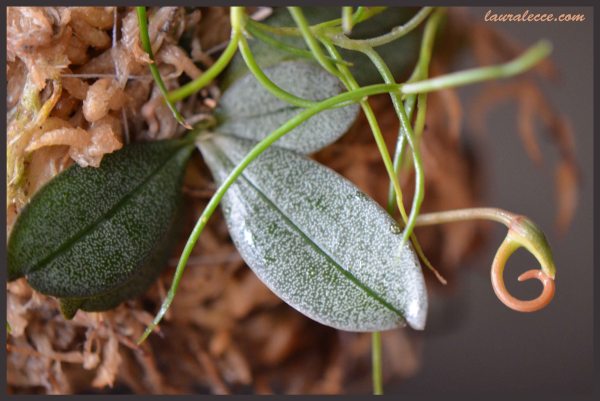
This teeny little beauty is an orchid originally found in Madagascar, and suitably named Aerangis Punctata. The plant size is usually about an inch big, and the flower it makes is bigger than the plant itself. I would watch the bud forming for months before it opens. It forms with a curled nectar filled spur which it unfurls just before the flower opens. Definitely builds an orchid lovers anticipation! Most Aerangis orchids make perfume at night to attract particular moths which have a long proboscis to pollinate the flower. Interestingly, the nectar in the spurs of some of these orchids have a concentration gradient which gets sweeter the deeper into the spur. This encourages the moth to penetrate the spur all the way and thus successfully pollinate the flower, and not waste sugar on moths with a short proboscis. Have a great weekend!

Aerangis Punctata Bud - Photograph by Laura Lecce
Aerangis Punctata Bud – Photograph by Laura Lecce

Fairy Playground

Fairy Playground - Photograph by Laura Lecce
Fairy Playground – Photograph by Laura Lecce

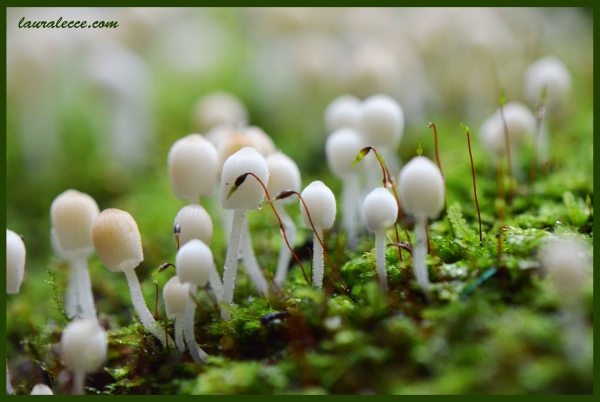
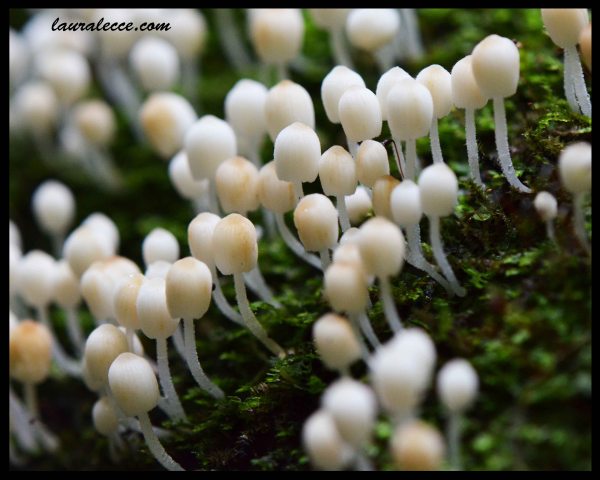
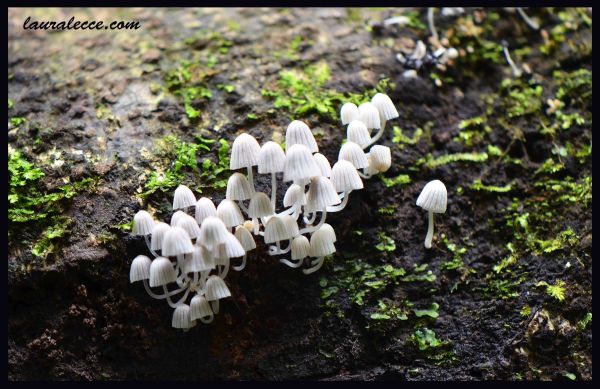
Sometimes I think my husband believes I’m crazy by how excited I get when I see a decaying tree trunk full of perfectly formed sprouting mushrooms. I think they’re absolutely adorable, and I mustn’t be the only one. I can see why people have often drawn fairies sitting atop mushrooms and toadstools. They seem like the perfect playground for teeny fairies to bounce across, and shelter under when it rains.

Field of Mushrooms - Photograph by Laura Lecce
Field of Mushrooms – Photograph by Laura Lecce

Mushrooms are also a perfect example of how death gives rise to new life. In the rainforest, every time a tree dies it gives life to millions of other organisms and its legacy lives on. I hope some of you share my delight in photographing mushrooms, and if so, please share a link to your photos, as I would love to see them!

The Lonely Mushroom - Photograph by Laura Lecce
The Lonely Mushroom – Photograph by Laura Lecce