Black currawong and her honey bush

Black currawong and her honey bush - Photograph by Laura Lecce
Black currawong and her honey bush – Photograph by Laura Lecce

This intense-looking bird is a black currowong native to Australasia that I photographed while hiking in Tasmania. These birds look quite similar to Australian magpies except that their eye color is yellow instead of red. They have a very special relationship with the richea honey bush and were featured in a David Attenborough narrated documentary called Life in the episode on plants. The honey bush encases its flowers in individual little pods which protect the flowers from cold weather and icy winds that are common in Tasmania. Unfortunately it also prevents successful pollination of the flowers by insects which cannot access them nor remove the protective outer casing. When warmer weather comes along the flowers produce a nectar which attracts the currawongs. They go about their day pulling off each of the little flower pods to access the nectar which also exposes the flowers to pollinating insects and thus the plant can reproduce.

For other posts from Tasmania please click here, or for birds please click here.

Angry Caracara

Angry Caracara
Angry Caracara – Photograph by Laura Lecce

This is an angry looking bird if ever I saw one! It is a caracara, which is a bird of prey belonging to the same family as falcons. Unlike falcons which are fast flying and skilled aerial hunters, these are the slower and lazier cousins which prefer to scavenge for prey that is already injured or dead. I’m pretty sure this is a northern caracara which has a less defined, patchy barring across the chest. The skin on their face ranges from yellow to deep red/pink depending on the age of the bird. This one was photographed in the Washington Slagbaai National Park in Bonaire, and as you can see he was not too happy about the photo.

For other posts on birds please click here.

Friday Flower – Desert Rose

desert-rose

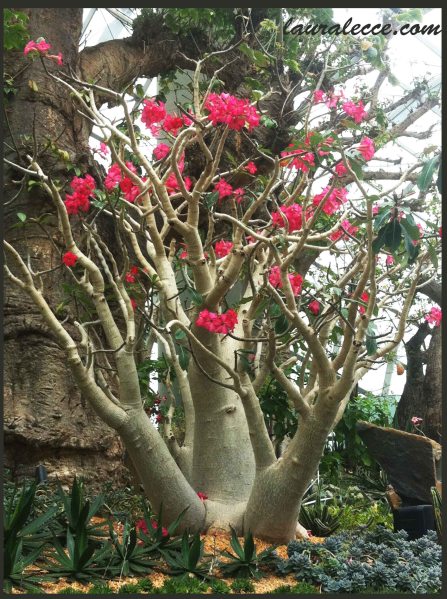
This stunning pink flower is called the dessert rose. Not only is it an impressive flower, but the plant itself is also very unique looking and an attractive plant to have in the garden or as a bonsai. It is native to Africa and The Middle East and is a close relative of the Frangipani and Oleander. The flowers come in various shades of pinks and reds. African hunters use the sap found in the trunk and roots to coat arrows as it contains cardiac glycosides which interfere with the contraction of heart muscle and is extremely toxic. These huge specimens that I photographed are found in the desert section of a stunning gardens in Singapore called Gardens By The Bay. Happy weekend everyone!!!

dessert-rose-plant

Jamaican shore crab

Jamaican shore crab - Photograph by Laura Lecce
Jamaican shore crab – Photograph by Laura Lecce

Today we start the week off with this smiley shore crab from Jamaica. This crab made me realize just how many different creatures are decorated with white spots and lines (one of which is the whale shark, click here for post). People tend not to pay too much attention to crabs unless they can eat them, they are however fascinating to watch. These shore crabs may look like they have thin spindly legs, but they are fantastic at holding on even when the rocks are getting pummeled with waves. They eat just about anything and everything including any animals that are sick or dead, but they also eat worms, barnacles, clams, mussels, snails and algae. Their biggest fear are sea gulls especially when the crabs are malting (because their new shell is still a bit soft), which explains why they are so quick to scurry to safety under a rock ledge if you startle them. Thankfully this one was quite willing to pose for my photos.

Flower Friday – Paphiopedilum diversity

Beauty in Diversity - Photograph by Laura Lecce
Beauty in Diversity – Photograph by Laura Lecce

How boring the world would be if everything was identical. Differences can sometimes create fear and competition, but it is those differences that create value in uniqueness. To appreciate beauty you must have seen the ugly, to appreciate brightness you have to first experience dullness. These two paphiopedilum orchids are stark opposites of each other and to me both equally stunning for their individuality. Everyone might have a favorite, but it is the differences that even give us a choice to chose. Different choices are neither good nor bad…. It is life. Happy weekend everyone!

For other orchid posts please click here.

Reg-eyed tree frog

Red-eyed tree frog - Photograph by Laura Lecce
Red-eyed tree frog – Photograph by Laura Lecce

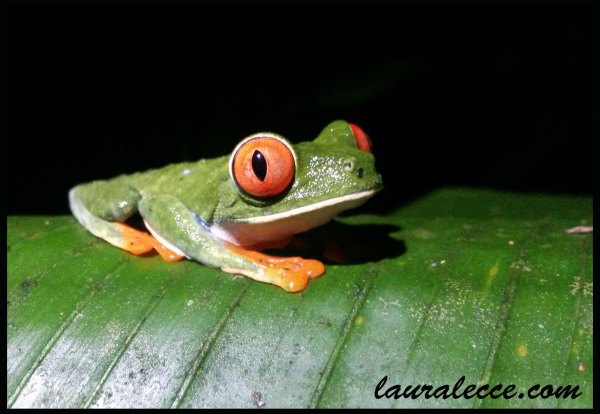
This glossy and colorful red-eyed tree frog lives in the jungle of Costa Rica. While visiting I attended a frog spotting tour which taught us how to listen for frog calls, spot the glistening eyes in our torch light and hopefully find the tiny frog making so much noise. It was harder than I thought! These frogs are very well camouflaged when they want to be. By tucking their orange toes under their belly and closing their eyes, the entire frog is as green as the leaf they’re sitting on. You can’t see it in this photo, but these frogs also have a fair bit of blue along the side of their body and upper arm which gets hidden when they tuck in their limbs. Their beautiful coloration and comical face makes them a very popular subject in animal photography. The bulging red eyes are great for startling predators who think they can make a meal out of a sleeping frog, and also signaling that this frog is not as tasty a meal as a predator might think. The eyes also help the frog swallow larger mouthfuls, this is done by pulling the eyes inwards which pushes the food down into their belly. I definitely had a great time observing some of the night activity that is usually only heard by humans.

For other posts from Costa Rica please click here.

Friday Flower – Phalaenopsis as a shimmery sunset

Phalaenopsis - Photograph by Laura Lecce
Phalaenopsis – Photograph by Laura Lecce

When nature created this orchid it was aiming for something truly special. This is an unknown phalaenopsis hybrid whose flowers each year were a highlight amongst my collection. The simultaneously soft and yet bold colors of a sunset radiate from the center to form a backdrop for the branching pink veins across the petals. Soft shimmery glitter peppers the surface and adds an extra touch of magic and awe to an already perfect flower. Nature is the most inspiring of all artists. Happy weekend everyone!

Click here for other orchid posts.

Hawk eating pigeon for lunch

Hawk eating pigeon for lunch - Photograph by Laura Lecce
Hawk eating pigeon for lunch – Photograph by Laura Lecce

Living in Manhattan, Central Park is my wilderness. I often see squirrels, ducks, geese, raccoons and turtles, but this weekend I was treated to something extra special. This stunning hawk who at first I thought was injured or had been in a fight (due to the bunch of feathers all over the ground around him), had in fact caught a pigeon for lunch and was in the process of shredding it. This red-tailed hawk, along with a few others often hunt in central park, but this is the first time I got to see this magnificent bird at  close range. Female red-tailed hawks grow larger than their male companions, and both are known to be monogamous in their relationship. Eggs and chicks are primarily looked after by the female hawk while her male partner provides them with food. It sounds like she has him well trained.

Communicating with a Squirrelfish

Squirrelfish wants to be friends - Photograph by Laura Lecce
Squirrelfish wants to be friends – Photograph by Laura Lecce

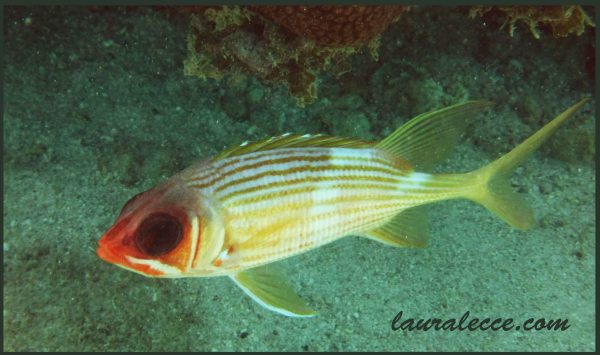
This beautiful Squirrelfish was spotted (with quite a few others) whilst recently snorkeling in Jamaica. These fish chose a home amongst the corals and rock crevices which they become very territorial about. They get incredibly defensive when someone infringes upon their space and will issue warnings by grunting and making other high pitched noises (which I obviously cannot hear underwater). For those of us who are hard of hearing, this fish also threateningly raised the spines along its back to let me know that I got too close. Once it realised I was a friend it went back to happily swimming laps around the coral and posing for some more friendly photos too. Because this fish stays close to its territory all the time it meant that I could find the exact same fish in the same location the next day. Click here for other underwater posts.

Squirrelfish with attitude - Photograph by Laura Lecce
Squirrelfish with attitude – Photograph by Laura Lecce

Flower Friday – Edible Dahlias

Pink Dahlia - Photograph by Laura Lecce
Pink Dahlia – Photograph by Laura Lecce

I’ve posted some interesting facts about Dahlias on my blog previously (click here), but did you know they’re also edible? You can eat both the flowers and the tubers (bulbs/roots), with different types having different flavors and some varieties being tastier than others. Another very gorgeous and also potentially yummy addition to your garden!

Check out James Wong’s very interesting post about edible dahlias here.

Happy weekend everyone!