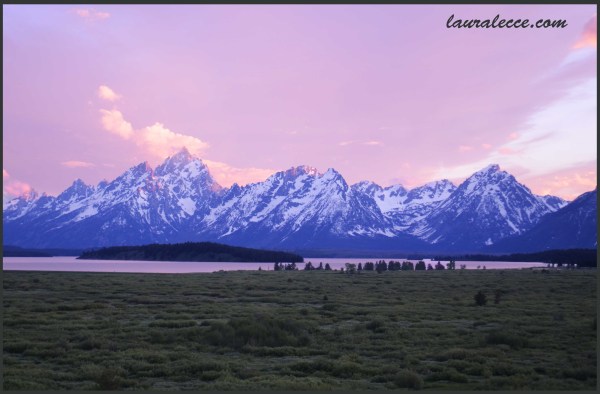
I always find it amazing how much the sky can transform a photograph. Although there is no guesses as to why sunrise and sunset are a photographers dream. It is at these times that the sky paints with the richest of colors. The ocean, lakes and ponds will also mirror the artwork in the sky to transform the landscape before your eyes. Depending on the cloud pattern in the sky, no day and no artwork will ever be the same, and just like this world they are truly one of kind.
For other images of the Teton Range and Grand Teton Nation Park click here.
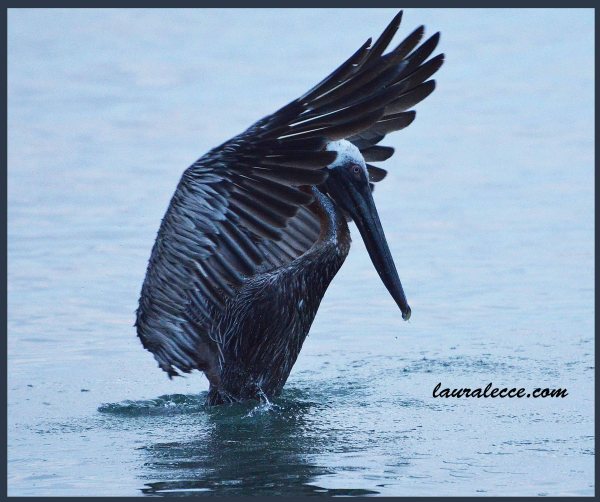
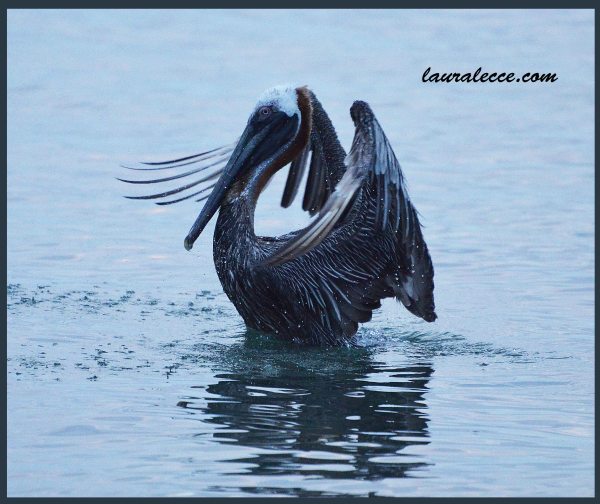
Dance of the Pelicans 1 – Photograph by Laura Lecce
This was one of my most challenging and yet rewarding photography experiences. I was sitting on a wharf, while the sun was setting in the late afternoon, watching pelicans in small groups dive bomb over and over again for food. I had to photograph a moving target, in frame and in focus, and hopefully come away with some incredible poses of these pelicans in flight. This is my favorite photo, I hope you enjoy seeing these incredible birds as much as I enjoyed taking their pictures.
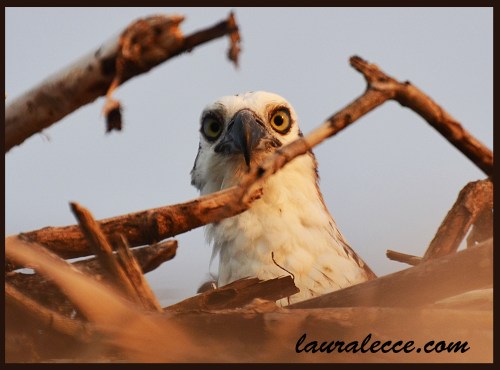
This gorgeous, nesting osprey was giving me a very stern stare while I was taking her photo. I don’t think it’s her fault though because ospreys look inherently grumpy. Contrary to how this photo appears, I am not close at all, but she spotted me from miles away! After soon deciding that I was nothing worth worrying over, her and her partner went back to usual osprey activities such as mating, eating recently caught fish and general nest building and sitting. I was lucky enough to be able to watch this osprey pair for a few days, and I absolutely loved getting such an insight into their daily activities.
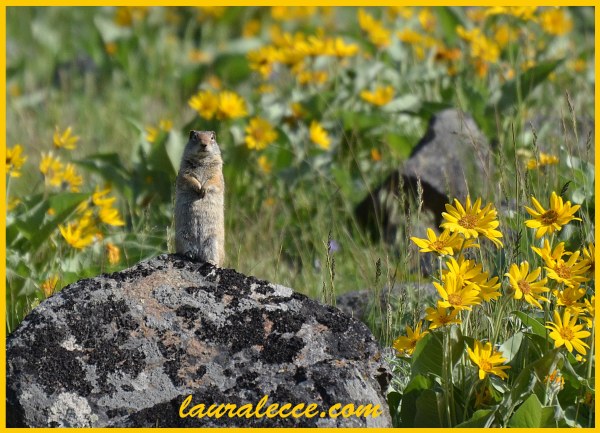
Whistle pig in a meadow – Photograph by Laura Lecce
Any creature in a meadow of bright yellow flowers is adorable, but these cute and furry ground squirrels are also very entertaining. You may also know them as marmots, groundhogs, woodchucks or whistle pigs. The last name describes the shrill call they make to alert the colony of trespassers nearby (such as us humans). Which also means that as you walk through whistle pig territory (Yellowstone National Park), you have high-pitched music following you around everywhere you go.
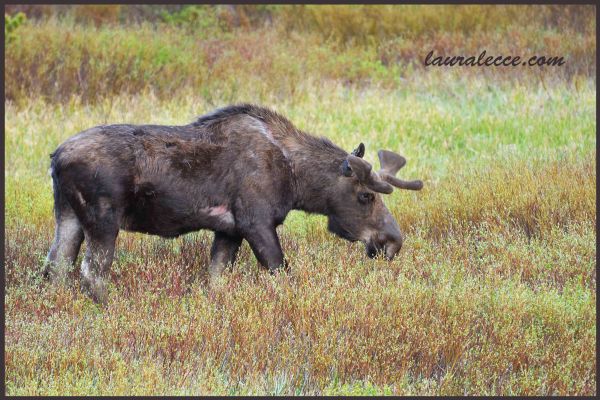
This male moose was just one of several moose we saw while traveling through Yellowstone National Park. We actually saw this particular moose on two occasions as he obviously likes to graze in the same area, and was accompanied by his girlfriend who was grazing nearby (I had to crop her rump out of my photo). Having visited in the Spring we were also lucky enough to catch a mother and her moose calf playing by a river. Knowing nothing about moose, I was surprised to learn that they grow new antlers every year, so that in Spring they don’t look like the typical male moose pictures you often see with giant antlers. Also, they are often found alongside rivers, lakes and marshy meadows because they like to feed on many aquatic plants as well, and have learned to be excellent swimmers and even dive for their underwater food! So when out looking for moose to photograph, check the nearby rivers and lakes…. who knew?!
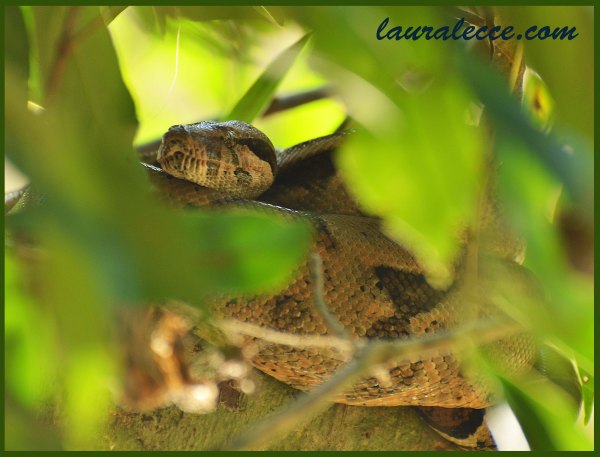
Beautiful Boa from Belize – Photograph by Laura Lecce
This is a gorgeous snake from Belize, which was happily perched on a tree branch hanging over a river taking a nap. By far the most sizeable snake I have ever seen in the wild, I was so excited to be taking its photo. I was quite close to the snake, trying to get a good angle through the leaves, and even though I didn’t know what kind of snake I was dealing with, I knew that if it remained happily coiled, I was going to survive the encounter. After a few photographs, the snake was clearly aware of my presence and started darting its tongue in and out to get a sense of what I was. I persisted with my photographs, and to my relief the snake stayed happily relaxed and allowed me to get my photo. After showing this photo to a snake expert, I was told it is a boa constrictor, a serial asphyxiator, a snake who chokes for a living! I was photographing a snake that belongs to the family of largest snakes in the world, made up of anacondas, pythons and boa constrictors. What an incredible thrill!
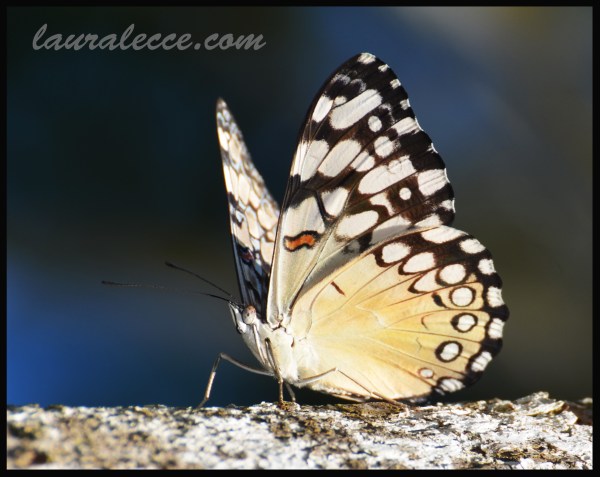
Black and white butterflies – Photograph by Laura Lecce
Looking at this photograph I started to wonder – What is the difference between a butterfly and a moth? Simple, right? Not so much. For every rule, there are always exceptions and this is no different. However, here are some of the (exceptions aside) differences between moths and butterflies.
Butterflies are generally a day creature (diurnal) while moths prefer the night (nocturnal). Due to this distinction, moths are usually colored grey, black and brown, while butterflies generally show off brilliantly colored wings. Butterflies have slender bodies and long, thin antennae with a club-shaped end, while moths are stout and furry and have feather-like antennae. Butterflies rest with their wings up (like the butterfly in this image), whereas moths rest with wings down. During metamorphosis, moths make a silk cocoon, whereas butterflies make a smooth and hard chrysalis.
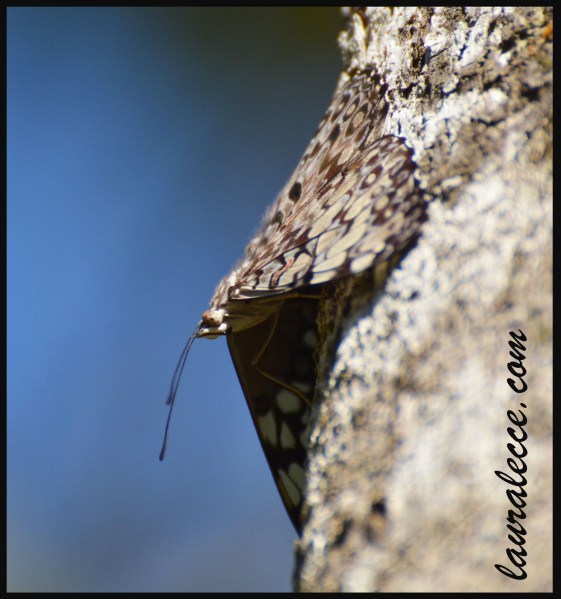
Although these are the general rules, this particular butterfly is not so brightly colored, and for the most part sat with wings down against this tree (see image below). I think these traits ensure successful camouflage with the bark of this tree, and therefore a greater likelihood this butterfly evades predation. This reminded me of the classic evolutionary tale of the peppered moths (for more info follow this link).
This brilliantly colored bug from Belize is called a flag footed bug and is also known as a leaf footed bug (Anisocelis flavolineata). It is found throughout Central America and comes in a variety of brilliant colors. There is very little information about them online, except that they can fly and are relatively harmless to humans. Although they can bite if provoked and it will sting a bit. The festive colors of this insect make it the perfect bug for the holiday season. Enjoy!


 Laura Lecce's art and photography