Dance of the Pelicans 1 – Photograph by Laura Lecce
This was one of my most challenging and yet rewarding photography experiences. I was sitting on a wharf, while the sun was setting in the late afternoon, watching pelicans in small groups dive bomb over and over again for food. I had to photograph a moving target, in frame and in focus, and hopefully come away with some incredible poses of these pelicans in flight. This is my favorite photo, I hope you enjoy seeing these incredible birds as much as I enjoyed taking their pictures.
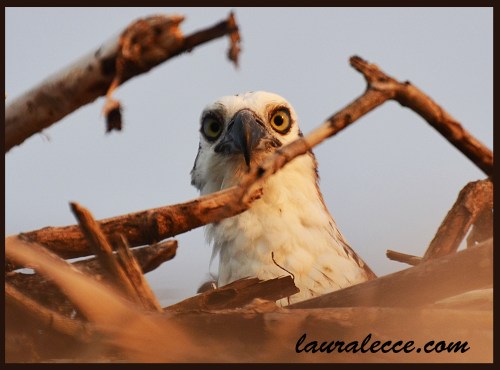
This gorgeous, nesting osprey was giving me a very stern stare while I was taking her photo. I don’t think it’s her fault though because ospreys look inherently grumpy. Contrary to how this photo appears, I am not close at all, but she spotted me from miles away! After soon deciding that I was nothing worth worrying over, her and her partner went back to usual osprey activities such as mating, eating recently caught fish and general nest building and sitting. I was lucky enough to be able to watch this osprey pair for a few days, and I absolutely loved getting such an insight into their daily activities.
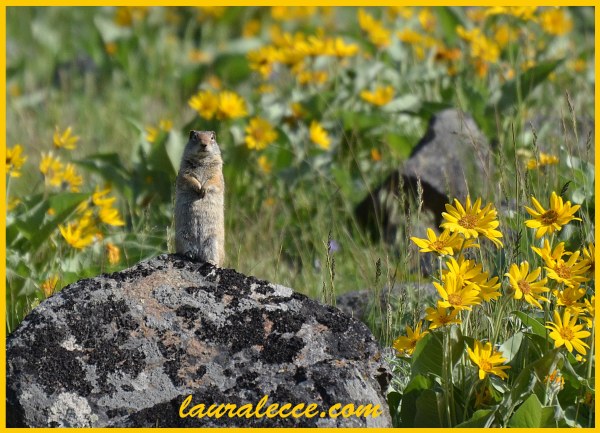
Whistle pig in a meadow – Photograph by Laura Lecce
Any creature in a meadow of bright yellow flowers is adorable, but these cute and furry ground squirrels are also very entertaining. You may also know them as marmots, groundhogs, woodchucks or whistle pigs. The last name describes the shrill call they make to alert the colony of trespassers nearby (such as us humans). Which also means that as you walk through whistle pig territory (Yellowstone National Park), you have high-pitched music following you around everywhere you go.
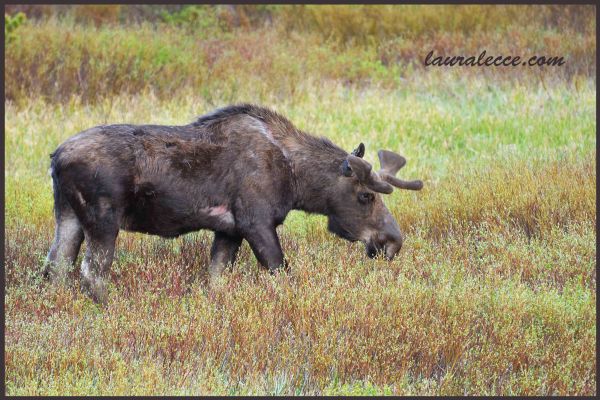
This male moose was just one of several moose we saw while traveling through Yellowstone National Park. We actually saw this particular moose on two occasions as he obviously likes to graze in the same area, and was accompanied by his girlfriend who was grazing nearby (I had to crop her rump out of my photo). Having visited in the Spring we were also lucky enough to catch a mother and her moose calf playing by a river. Knowing nothing about moose, I was surprised to learn that they grow new antlers every year, so that in Spring they don’t look like the typical male moose pictures you often see with giant antlers. Also, they are often found alongside rivers, lakes and marshy meadows because they like to feed on many aquatic plants as well, and have learned to be excellent swimmers and even dive for their underwater food! So when out looking for moose to photograph, check the nearby rivers and lakes…. who knew?!
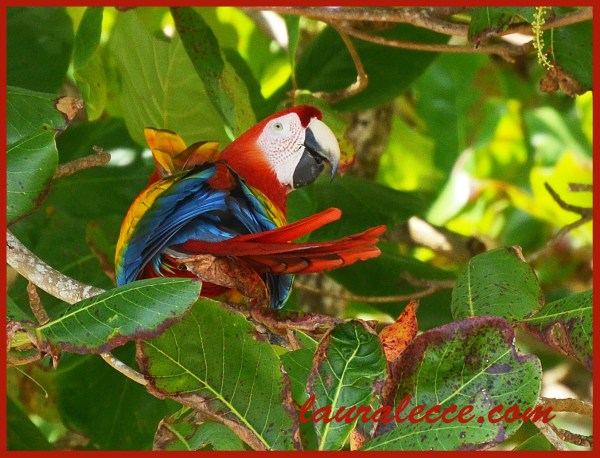
This brightly colored scarlet macaw was spotted with it’s equally impressive partner, chowing down on beach almonds (Terminalia catappa tree) along the coast of Costa Rica. As is quite typical of the parrot family, they are large and they are loud! You almost always see them flying and hanging out in pairs, and they know how to communicate very well with each other. They will let each other know when it’s time to fly off to another spot with a very loud screech. This was such a spectacular sight on a bright sunny beach day – life doesn’t get any better than this. It makes me sad to think about how many of these birds live in isolation, in cages, unable to be free or have a partner to chat with. As glorious as they are to look at, nothing is more glorious than spotting them flying freely through the sky as nature intended it.
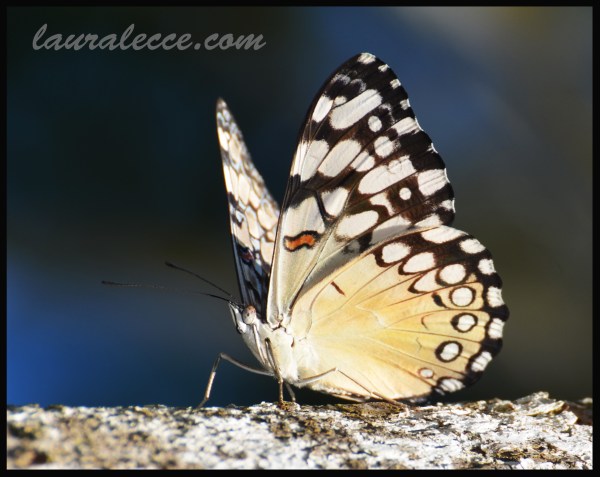
Black and white butterflies – Photograph by Laura Lecce
Looking at this photograph I started to wonder – What is the difference between a butterfly and a moth? Simple, right? Not so much. For every rule, there are always exceptions and this is no different. However, here are some of the (exceptions aside) differences between moths and butterflies.
Butterflies are generally a day creature (diurnal) while moths prefer the night (nocturnal). Due to this distinction, moths are usually colored grey, black and brown, while butterflies generally show off brilliantly colored wings. Butterflies have slender bodies and long, thin antennae with a club-shaped end, while moths are stout and furry and have feather-like antennae. Butterflies rest with their wings up (like the butterfly in this image), whereas moths rest with wings down. During metamorphosis, moths make a silk cocoon, whereas butterflies make a smooth and hard chrysalis.
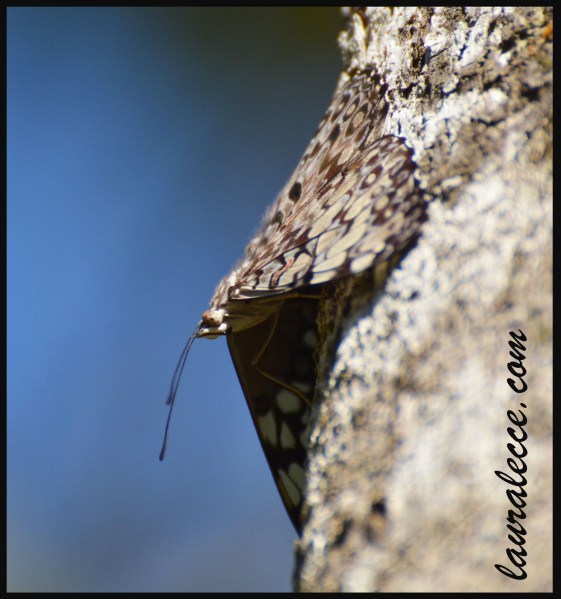
Although these are the general rules, this particular butterfly is not so brightly colored, and for the most part sat with wings down against this tree (see image below). I think these traits ensure successful camouflage with the bark of this tree, and therefore a greater likelihood this butterfly evades predation. This reminded me of the classic evolutionary tale of the peppered moths (for more info follow this link).
Portrait of a male elk – photograph by Laura Lecce
Merry Christmas and Happy New Year to all of my followers. I’m looking forward to an exciting 2018 with many more animals and many more photos, and I hope your 2018 also brings you much joy and happiness!
This colorful parrotfish living amongst the reef in Belize, flashed me a giant smile, showing me some bright white teeth. They use these teeth to scrape algae off corals and rocks, thus preventing algae overgrowth in the reef. This harsh treatment on their teeth as they eat means that they grow continuously throughout their life. I must say that it is a totally different felling getting a toothy smile from a parrotfish compared to a toothy grin from a shark!
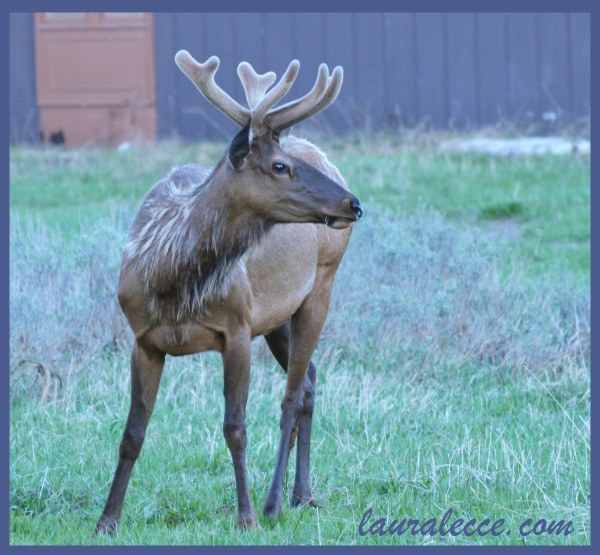
An elk is not a reindeer – Photograph by Laura Lecce
This is a sleek and athletic looking young male elk. He calls Yellowstone National Park his home, and was munching on dinner in this lush grassy area. This is probably the closest chance I will have to see a reindeer-like animal. Elk and reindeer are very similar in size, however elk fur is very sleek and shiny, mostly dark with a white bum, and with shaggy fur around their necks. This is clearly a male with his small antlers, that will grow much, much larger once he’s older. They are newly grown and still covered in a velvet-like skin which will dry and fall off in Autumn. Each year after mating season, the antlers will also fall off and grow again for the next mating season. With reindeer, the presence of antlers cannot be used to distinguish between them, as both males and females have antlers.
For other posts from Yellowstone National Park click here.
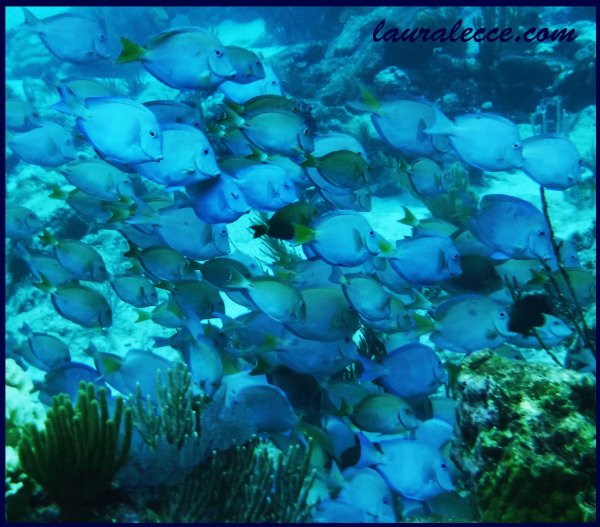
A gorgeous school of Blue Tang fish swimming through the corals around South Water Caye island in Belize. These fish swim across you in undulating waves, and it’s very soothing and relaxing to watch them. They mostly swim in a large school of fish, moving through the water as if they are a single large organism, all connected and communicating. They seem so peaceful, as if no predators exist in the world, and for those moments I wish that could be true for us all.




 Laura Lecce's art and photography