Black currawong and her honey bush

Black currawong and her honey bush - Photograph by Laura Lecce
Black currawong and her honey bush – Photograph by Laura Lecce

This intense-looking bird is a black currowong native to Australasia that I photographed while hiking in Tasmania. These birds look quite similar to Australian magpies except that their eye color is yellow instead of red. They have a very special relationship with the richea honey bush and were featured in a David Attenborough narrated documentary called Life in the episode on plants. The honey bush encases its flowers in individual little pods which protect the flowers from cold weather and icy winds that are common in Tasmania. Unfortunately it also prevents successful pollination of the flowers by insects which cannot access them nor remove the protective outer casing. When warmer weather comes along the flowers produce a nectar which attracts the currawongs. They go about their day pulling off each of the little flower pods to access the nectar which also exposes the flowers to pollinating insects and thus the plant can reproduce.

For other posts from Tasmania please click here, or for birds please click here.

Friday Flower – Desert Rose

desert-rose

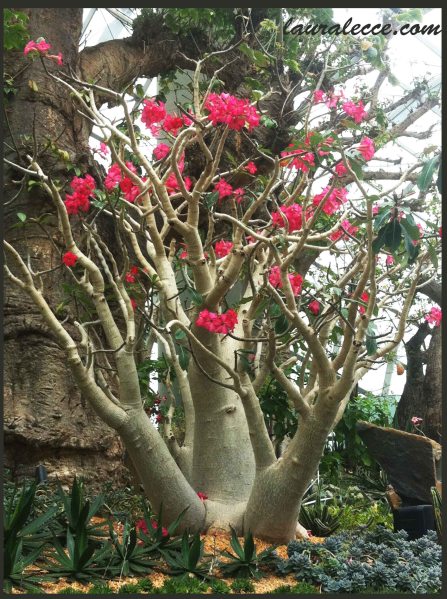
This stunning pink flower is called the dessert rose. Not only is it an impressive flower, but the plant itself is also very unique looking and an attractive plant to have in the garden or as a bonsai. It is native to Africa and The Middle East and is a close relative of the Frangipani and Oleander. The flowers come in various shades of pinks and reds. African hunters use the sap found in the trunk and roots to coat arrows as it contains cardiac glycosides which interfere with the contraction of heart muscle and is extremely toxic. These huge specimens that I photographed are found in the desert section of a stunning gardens in Singapore called Gardens By The Bay. Happy weekend everyone!!!

dessert-rose-plant

Friday Flower – Phalaenopsis as a shimmery sunset

Phalaenopsis - Photograph by Laura Lecce
Phalaenopsis – Photograph by Laura Lecce

When nature created this orchid it was aiming for something truly special. This is an unknown phalaenopsis hybrid whose flowers each year were a highlight amongst my collection. The simultaneously soft and yet bold colors of a sunset radiate from the center to form a backdrop for the branching pink veins across the petals. Soft shimmery glitter peppers the surface and adds an extra touch of magic and awe to an already perfect flower. Nature is the most inspiring of all artists. Happy weekend everyone!

Click here for other orchid posts.

Flower Friday – Leonotis leonurus

Leonotis leanurus - Photograph by Laura Lecce
Leonotis leanurus – Photograph by Laura Lecce

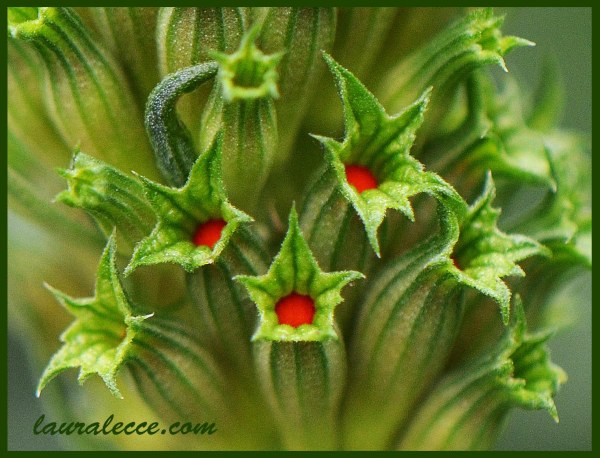
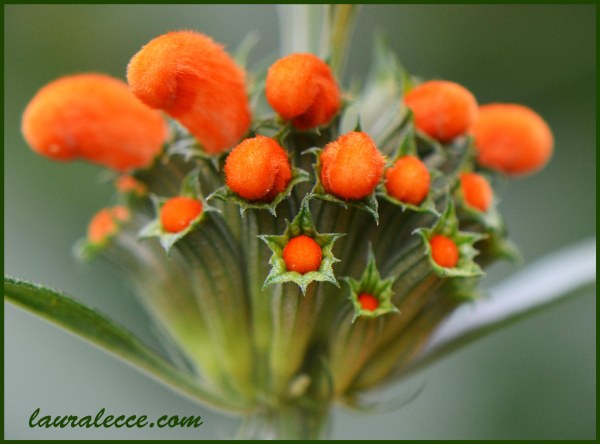
These photos are from the very unusual plant called leonotis leonurus (commonly called lion’s tail or wild dagga) native to South Africa. A very hardy perennial plant belonging to the mint family which is drought resistant, deer resistant and also used as an annual in colder climates. It forms unusual tubular flowers in clusters along the stem with newer clusters appearing at the top. The shape of the flowers are perfectly suited for pollination by sunbirds and hummingbirds, but also attracts butterflies and bees with sweet nectar inside the flowers. This plant has psychoactive compounds with similar effects to cannabis in that smoking dried leaves and flowers can give a mild calming effect (please do not try this on account of my blog!) Leonurine has also been found to have antioxidant, cardio-protective, anti-inflammatory and hypoglycemic (anti-diabetic/blood sugar lowering) properties. The unusual flowers which are commonly orange but also come in a white and yellow variety gave me some very bright and interesting photographs. Happy weekend everyone, see you in 2017!!!

Lions Tail - Photograph by Laura Lecce
Lions Tail- Photograph by Laura Lecce

Great blue heron at sunset

Great blue heron at sunset - Photograph by Laura Lecce
Great blue heron at sunset – Photograph by Laura Lecce

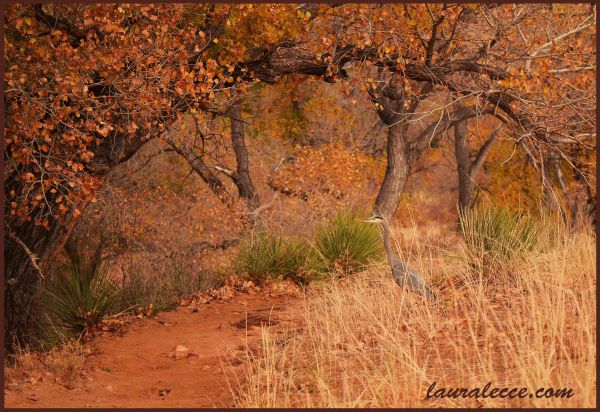
I love the warm golden colors that the setting sun has painted across this landscape. This magnificent great blue heron was photographed in Zion National Park in Utah. I have seen many herons since moving to America, and even though we have herons in Australia I never really noticed them before. I am always amazed that for such a large bird, herons are incredibly shy and skittish. No matter how slow I try to creep up they never let me get very close at all, but I have seen these birds get courageously close to some pretty massive alligators! The photo below is the original before cropping which has a very beautiful arch created by tree branches. A dry looking landscape hiding a trickling stream just behind the tree line, and a dusty red path occasionally dotted with a green firework – sometimes nature creates its very own artworks.

Heron under tree arch - Photograph by Laura Lecce
Heron under tree arch – Photograph by Laura Lecce

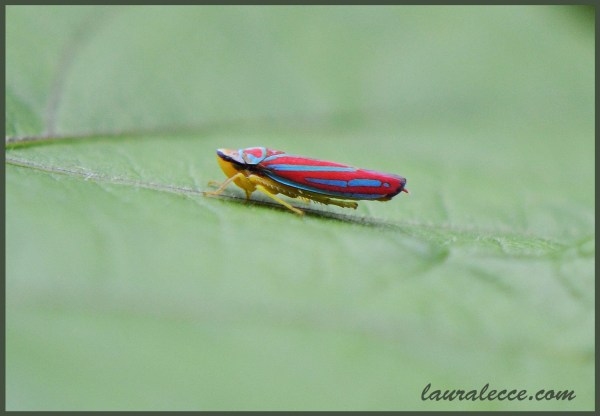
Red-Banded Leafhopper

Leafhopper - Photograph by Laura Lecce
Leafhopper – Photograph by Laura Lecce

Gary I found one!!! Australia definitely doesn’t have such boldly colored leafhoppers, they are mostly a boring green color, making them very hard to spot amongst the leaves. In contrast, this red-banded leafhopper I found in Central Park is incredibly colorful, and doesn’t blend in at all. Native to North and Central America, this insect is so teeny tiny, it makes some ants look big! I wouldn’t have even known what I was looking at if it wasn’t for a post by Gary on his blog called krikitarts showcasing this spectacular insect (click here for post), with a fantastic photo as well. As soon as I spotted it, I was so excited to see one for myself. It was incredibly hard to photograph as the breeze kept moving the leaf, and the little critter wouldn’t stay still at all, and he’s so tiny I kept losing him, so this is as good a photo as I could get. This colorful insect certainly brightened up my overcast and dreary Sunday afternoon.

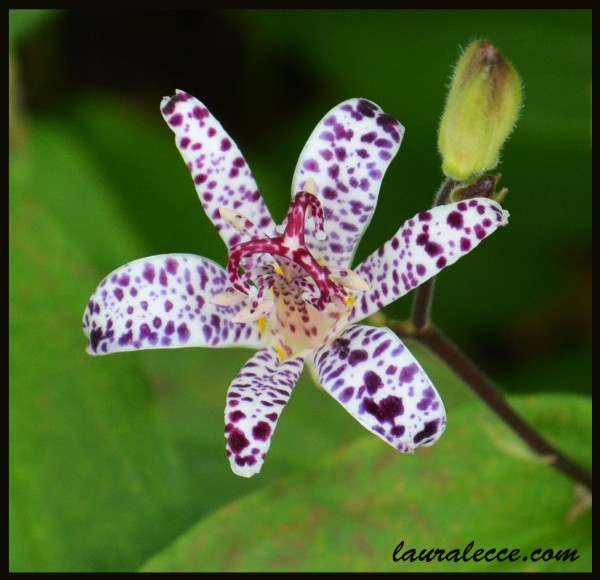
Flower Friday – Japanese Toad Lily

Japanese Toad Lily - Photograph by Laura Lecce
Japanese Toad Lily – Photograph by Laura Lecce

This is a photo of a Japanese Toad Lily, which in my opinion, is quite an unattractive name given to a beautiful flower. This was the first time I have seen or heard of this flower. It is native to Japan, and flowers late in summer to early fall. One particular piece of information that stuck in my mind above all others, is that this flower is deer resistant. To an Australian who has never, and will never experience a deer visiting my garden, this intrigued me. I further found out that deer resistant means that it is not one of their favorite flowers to munch on. If I had the slightest possibility that a deer might visit me, I would be someone who would plant flowers purely to entice deer into my garden. Though I can also understand the frustration of people who want a flower filled garden, and are constantly losing flowers to hungry deer. If you are experiencing that frustration, then supposedly this flower is a good choice for your garden, as it may last longer than other flowers which deer think are yummy to eat.

Have a great weekend everyone, and for other flowers please click here.