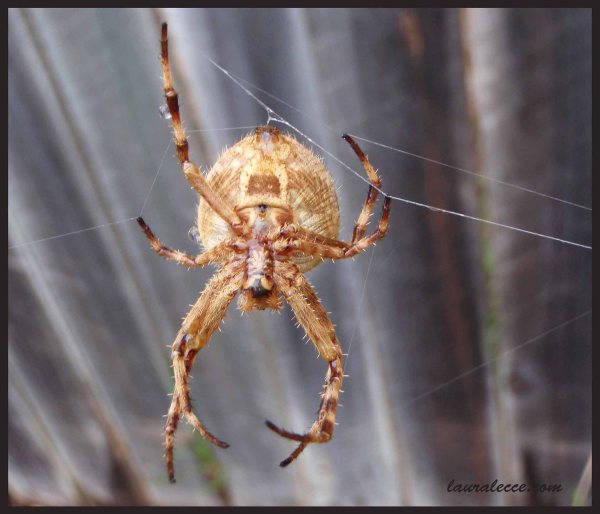
I thought it about time for another spider, also a very common species on the east coast of Australia. Don’t worry, just like the St Andrews Cross spider, this is also one of Australia’s friendly spiders which wont kill you. The garden orb weaver is a beautiful arachnid, easily identified by its signature plump belly. It spends the early evening making a magnificent web and spends the night sitting in the center, waiting for an unsuspecting winged insect to fly into this brilliantly formed trap. During the day, the spider will leave the web and tuck itself away in a rest spot, often a leaf very close to edge of the web. If you are walking around and get a face full of spider web, its usually from these guys, thankfully its most often without the spider on your face too!
This small coral structure looks like a beautiful underwater castle. It is a hard coral which is home to millions of teeny tiny individual polyps in a castle constructed out of calcium carbonate. Other likely residents within this castle are single-celled algae. The algae use energy from the sun to make sugars and fats which they share with the coral allowing it to grow faster. The coral animals also make waste which feeds the algae. Together they make a very large and happy family of teeny residents in a beautiful castle. They even have a blue Christmas tree worm as a pet in the yard!
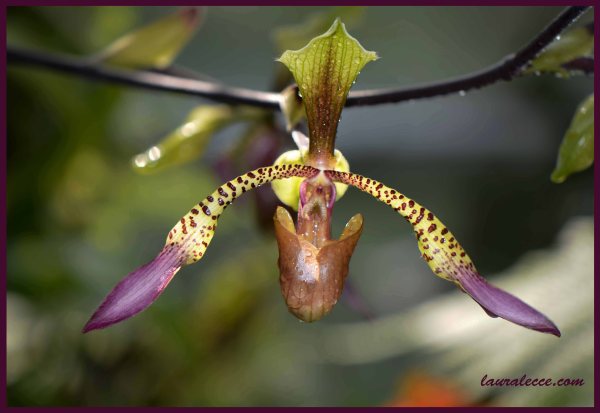
I’m not sure if any of my followers are orchid fanatics, nevertheless I will tread lightly. This photograph is of a paphiopedilum orchid, and I “think” it is Paph. Lowii but I cant be sure as it was unlabeled. This very cute family of orchids has a pouch-like labellum, and are quite easy to grow, making them one of the most widely cultivated and hybridized of orchids. They come in such a huge variety of colors, and some even have very beautifully mottled leaves (although P. Lowii does not). Paphs will usually only flower from a shoot once. After using a lot of its energy to flower, the remaining energy is put towards making new shoots to replace the parent once it dies. It becomes a cycle of making a new plant, flowering and then dying, and thus it is often possible to see multiple generations of plants in the same pot at once. Happy Friday and have a wonderful weekend!
St Andrews Cross Spider – Photograph by Laura Lecce
Not necessarily an image you want with your leisurely morning coffee whilst browsing your WordPress reader (sorry for that). This spider is just one of the species under the genus Argiope which are known for the striking colors on their abdomen. A. keyserlingi and A. aetherea are found in Australia and we call them St Andrews Cross spiders because they sit in the very center of the web with pairs of legs together in an X shape. They also often incorporate a much larger X across the web with silk (part of this can be seen in the bottom left of this photo). Rest assured, this is one of Australia’s friendly spiders which wont kill you 😉
It takes time to be old and wise – Photograph by Laura Lecce
I was lucky enough to encounter many Capuchin monkeys in Costa Rica. After watching them for some time, I was able to observe some of their relationships and behaviors. In the first image, I had clearly met one of the more senior and respected members of the group. This individual was happiest observing the humans that were observing him, and was quite content in sitting back and allowing the other younger capuchins to cause a raucous.
The Coast is Clear – Photograph by Laura Lecce
They often moved together as large family groups, and when they did it was like a tornado moving through the trees. At one point they needed to cross a road, and before letting the mums and bubs exit the safety of the trees, they sent out scouts (pictured in the second image) to make sure the coast was clear. Once the scouts gave the all clear, monkey after monkey came flying out of the trees to scurry across the road and back into the jungle. Some of their leaps from tree to tree were incredibly far and seemed very dangerous, but they were completely confident and surefooted.
Caught Making a Mess – Photograph by Laura Lecce
The monkey pictured in this last photo was caught making quite a mess with the little fruits hanging from this palm tree. Surely a source of food for these cuties, but at times it looked like it was having more fun throwing the fruits to the ground than actually caring to eat them. I think their cute little faces easily fool humans into thinking they are very friendly, but in contrary they can be quite aggressive and territorial and wont hesitate to flash some pretty sharp canines if you get too close.
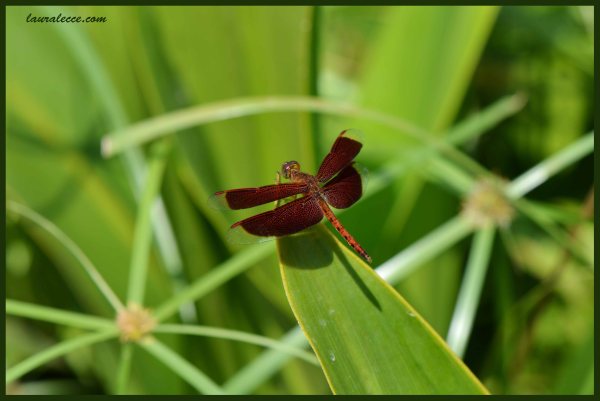
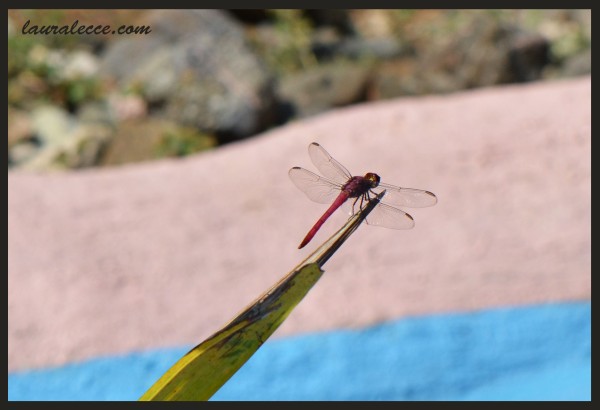
This one’s for you Walter… (for everyone else, if you want to see AMAZING dragonfly photos you should most definitely click here to visit Walter Sanfords blog). So here are my amateur attempts at photographing some dragonflies, and I’ve discovered that you need a lot of patience to do this. These first two are from Singapore, which were sitting in a giant lily pond in the national botanic gardens, a stunning place, especially if you like orchids.
Another Red Dragonfly – Photograph by Laura Lecce
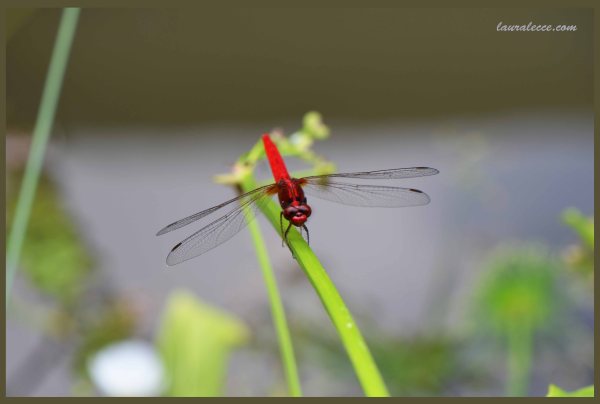
The last one was from Costa Rica, and was continually circling a small pool of water outside my door. I stood for at least 45 minutes (felt like hours) in sweltering hot sun and ridiculous humidity, sweating like never before, all waiting for this dragonfly to land so I could take a damn photo. It actually did land every now and then, always in the same spot, but only for a second before taking off again and flying in circles. So I knew exactly where to point my camera and wait for the landing. Disappointingly, this was as close as I could get, otherwise it refused to land at all. So not a great photo, but I really tried!
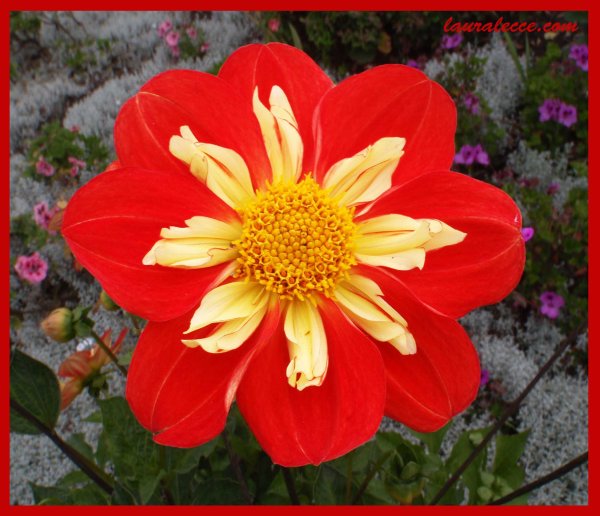
When I took this photo, I never imagined this was actually a dahlia, although now that I look at the buds and leaves more closely it makes sense. The dahlias my granddad used to grow always looked like giant pompoms (which is correctly spelt pompon in French, but was misheard as pompom by the English). Anyways, back on topic… dahlias have such a large array of variations because unlike most other plants which have two sets of chromosomes, they actually have eight! This allows for a multitude of genetic combinations and contributes to the wide diversity seen amongst these lovely flowers. Have a bright and cheery weekend everyone!
I love this image of two butterflies because to me it looks as though the pattern and coloration on their wings is as if created with colored pencils. It has a delicate softness to it. Acrobatically mating upside down, together they join to create an interesting merging of patterns, both sides slightly different but equally beautiful.
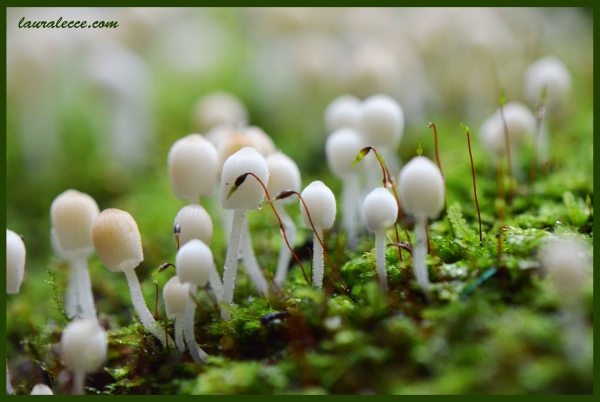
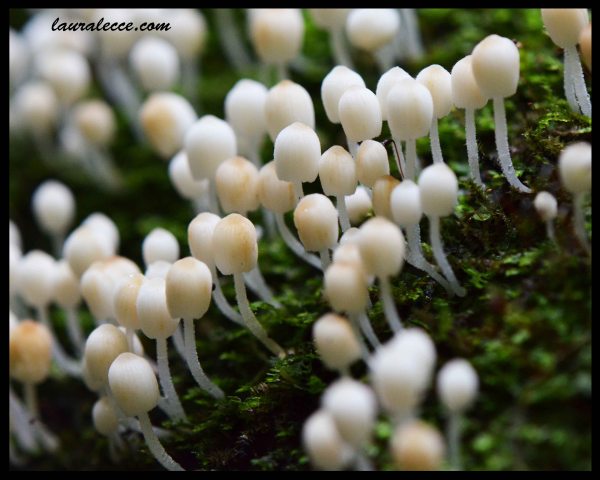
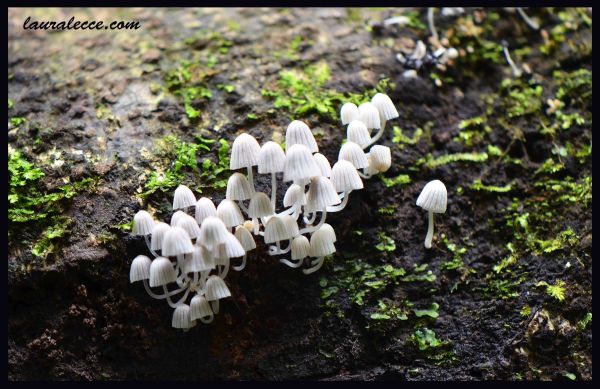
Sometimes I think my husband believes I’m crazy by how excited I get when I see a decaying tree trunk full of perfectly formed sprouting mushrooms. I think they’re absolutely adorable, and I mustn’t be the only one. I can see why people have often drawn fairies sitting atop mushrooms and toadstools. They seem like the perfect playground for teeny fairies to bounce across, and shelter under when it rains.
Field of Mushrooms – Photograph by Laura Lecce
Mushrooms are also a perfect example of how death gives rise to new life. In the rainforest, every time a tree dies it gives life to millions of other organisms and its legacy lives on. I hope some of you share my delight in photographing mushrooms, and if so, please share a link to your photos, as I would love to see them!
I recently took a photo of this moth, plainly colored in tan, black and white. I found the geometric pattern on its wings quite strikingly symmetrical and streamlined that it reminded me of a fighter jet airplane. A very large and very beautiful winged creature.






 Laura Lecce's art and photography