Bark-mimicking grasshopper

Bark-mimicking Grasshopper – Photograph by Laura Lecce

This sizable insect is commonly known as a bark-mimicking grasshopper (Coryphistes ruricola) and even its eyes look like they are actually made of wood. They are common in Australia and depending on location and surrounding environment, appear in various colors from grays to browns. Collectively they are an interesting view of natural selection at work. This grasshopper which was photographed in Western Australia was in an area where there weren’t many trees at all, but blended in very well with the sand it was sitting on. If I was a bird I would certainly think twice about whether I was about to eat a grasshopper or a piece of fallen tree branch.

For other insects please click here.
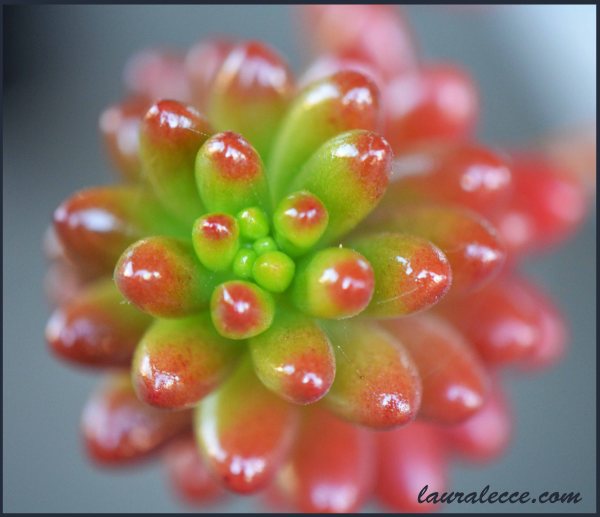
Friday Flower – Jelly bean succulent

Jelly bean succulent – Photograph by Laura Lecce

Succulent sedum rubrotinctum is native to Mexico and a very lovely addition to any succulent garden. It displays lovely green jelly beans along each branch for most of the year except in summer to early spring when it gets a bit more sun it will blush a delicate red. Like most succulents, each individual segment (or bean) can fall off (or be picked off) and will grow roots and a brand new succulent when it touches the soil. The branches of this succulent grow upwards towards the sun and when they become long and heavy enough they will cascade over the side of a pot. For some creative succulent photography (and provided you don’t mind sacrificing your succulent for the sake of a photo) I sprayed this succulent branch with hairspray first to give it a lovely glossy shine. Happy weekend everyone!

For other succulent posts please click here.

When science mimics nature

Science mimics nature - Photograph by Laura Lecce
Science mimics nature – Photograph by Laura Lecce

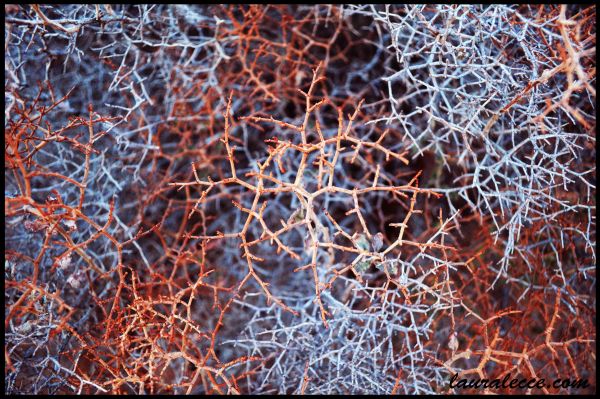
For this Friday instead of a flower I wanted to show you this photo I took of a brittle winter shrub I came across in Utah. I was attracted to the geometry of the branches, the different layers of focus and the contrasting segments of color that come together to form a very beautiful abstract image. Many things that scientists do can resemble this kind of picture. Some examples are the drawings of chemical structures consisting of different atoms and their bonds, or cells branching out to each other in a culture dish. This kind of picture reminds me that nature, science and art are intricately linked. I hope you can also appreciate the beauty in each of those. Happy weekend everyone!

Friday Flower – Desert Rose

desert-rose

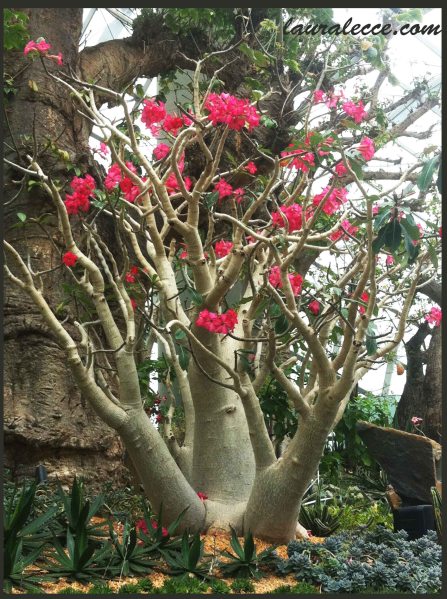
This stunning pink flower is called the dessert rose. Not only is it an impressive flower, but the plant itself is also very unique looking and an attractive plant to have in the garden or as a bonsai. It is native to Africa and The Middle East and is a close relative of the Frangipani and Oleander. The flowers come in various shades of pinks and reds. African hunters use the sap found in the trunk and roots to coat arrows as it contains cardiac glycosides which interfere with the contraction of heart muscle and is extremely toxic. These huge specimens that I photographed are found in the desert section of a stunning gardens in Singapore called Gardens By The Bay. Happy weekend everyone!!!

dessert-rose-plant

Spotted Eagle Ray

spotted-eagle-ray2
Spotted Eagle Ray – Photograph by Laura Lecce

This week I wanted to continue the theme of spotted sea creatures. This is a spotted eagle ray, also seen while snorkeling off the beach in Jamaica. They live in tropical waters and have one of the longest tails compared to other sting rays. Unlike most other fish they give birth to live baby sting rays. I must apologize for the bad photography, this ray did not make things easy for me at all. He instantly knew the second I had spotted him (pun intended) and took off so fast that I had to channel my inner Olympic swimmer to get any photo at all! These beautiful underwater creatures are named eagles for a reason, they truly do appear as though they are flying underwater with no resistance at all…. the absolute opposite of my clumsy thrashing and getting nowhere at all.

spotted-eagle-ray
Spotted Eagle Ray in Jamaica – Photograph by Laura Lecce

Flower Friday – Paphiopedilum diversity

Beauty in Diversity - Photograph by Laura Lecce
Beauty in Diversity – Photograph by Laura Lecce

How boring the world would be if everything was identical. Differences can sometimes create fear and competition, but it is those differences that create value in uniqueness. To appreciate beauty you must have seen the ugly, to appreciate brightness you have to first experience dullness. These two paphiopedilum orchids are stark opposites of each other and to me both equally stunning for their individuality. Everyone might have a favorite, but it is the differences that even give us a choice to chose. Different choices are neither good nor bad…. It is life. Happy weekend everyone!

For other orchid posts please click here.

Friday Flower – Phalaenopsis as a shimmery sunset

Phalaenopsis - Photograph by Laura Lecce
Phalaenopsis – Photograph by Laura Lecce

When nature created this orchid it was aiming for something truly special. This is an unknown phalaenopsis hybrid whose flowers each year were a highlight amongst my collection. The simultaneously soft and yet bold colors of a sunset radiate from the center to form a backdrop for the branching pink veins across the petals. Soft shimmery glitter peppers the surface and adds an extra touch of magic and awe to an already perfect flower. Nature is the most inspiring of all artists. Happy weekend everyone!

Click here for other orchid posts.

Flower Friday – Echinacea

Echinacea with a Bee - Photograph by Laura Lecce
Echinacea with a Bee – Photograph by Laura Lecce

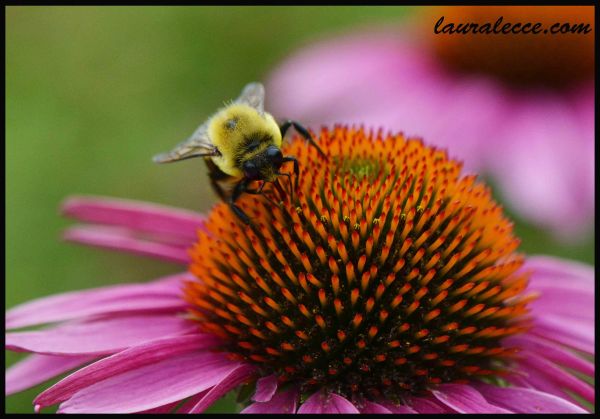
These lovely, pink, cheerful flowers are just one type of Echinacea, in which there are 9 different species. I took these photographs in the Spring of last year and on this particular day the bees were in out in overwhelming numbers. This made for some easy macro photography of these busy bees because all I had to do was point my camera at a flower and click. Echinacea may sound familiar as it is a herb said to have numerous health benefits such as cold prevention, boosting the immune system, anti-inflammatory effects, mental health improvement and many more. However, even though there are some studies which may show it is has beneficial effects, there are others which say that these effects are yet unfounded. Regardless of whether Echinacea is good for us, it is definitely beneficial to your garden to grow such happy looking flowers which encourage the bees to come and visit.

Echinacea flowers make the bees happy – Photograph by Laura Lecce

Friday – A Flower and a Fly

A Flower and a Fly - Photograph by Laura Lecce
A Flower and a Fly – Photograph by Laura Lecce

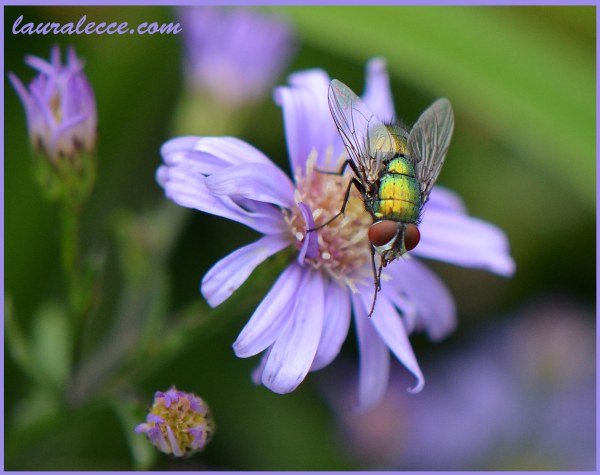
Today I present to you this fly……on a flower. This fly is called a green bottle fly because of the shiny metallic green color of its body. Flies such as these have very important uses in both forensic science and medicine. They are often the first flies to arrive at a human or animal carcass, and this is where they can begin their lifecycle – A female will lay about 200 eggs which hatch and become larvae in 1-3 days, fully developed larvae in 3-10 days, and pupal development takes 6-14 days after which an adult fly emerges. Forensic investigators can use this knowledge to approximate the length of time a deceased has been dead.

These flies (or more correctly, the maggots) are used by doctors to treat wounds which are unresponsive to conventional treatments. They eat away the dead tissue and bacteria, and also secrete antimicrobial enzymes which together prevents infection and allows healthy tissue to grow successfully. Given the increasing resistance of bacteria to known antibiotics, this may just become the medicine of the future. Sorry to give such a literal example of making your skin crawl….

Happy weekend everyone!

Friday Flower – My Bleeding Heart Vine

My Bleeding Heart Vine - Photograph by Laura Lecce
My Bleeding Heart Vine – Photograph by Laura Lecce

This adorable little red flower is from a Bleeding Heart Vine (Clerodendrum thomsomiae), a native to tropical west Africa. This plant utilizes two reproductive strategies, dichogamy and herkagomy which mean that the stamens (male reproductive parts) ripen at a different time and are spatially separated to the pistil (female reproductive part), thus ensuring that this plant cannot self pollinate. Instead, the hard work is accomplished by butterflies and hummingbirds which spread the pollen to other plants. This also means that the genetic diversity of this plant is increased through combining the genes of separate plants, providing a higher chance of adaptation and evolutionary survival. Too much science for a Friday? In that case, happy weekend everyone!