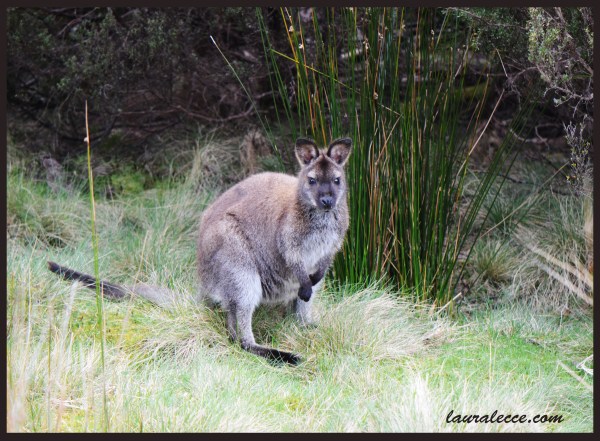
This gorgeous wallaby was photographed in Tasmania, Australia. Native to Australia, these beautiful animals are in the same family as Kangaroos but were informally designated as wallabies due to their generally smaller size. Interestingly, there are a number of feral populations of wallabies in various places around the world including Hawaii, England and France because these bouncy critters are great at escaping from the zoo!
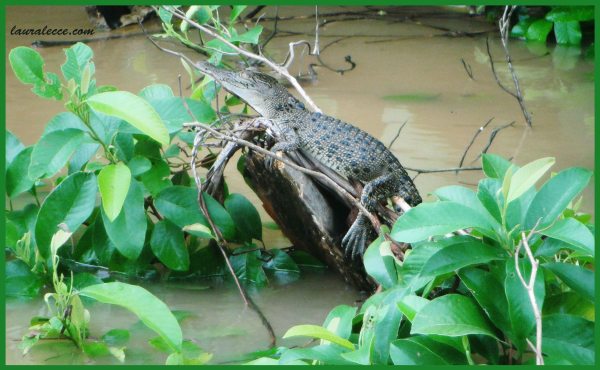
Even the largest and scariest of animals were once a cute little baby (except birds which definitely get cuter with age). This adorable baby crocodile is contently sunning itself in a river in Cairns, located in far north Queensland. As cute as this little guy may be, where there is a baby, there must be a mummy and a daddy. Cairns is home to saltwater crocodiles, currently the largest living reptiles, and the much larger and more aggressive cousin of the freshwater crocs. It made me very glad that I was in a boat on this river and not in a small canoe!
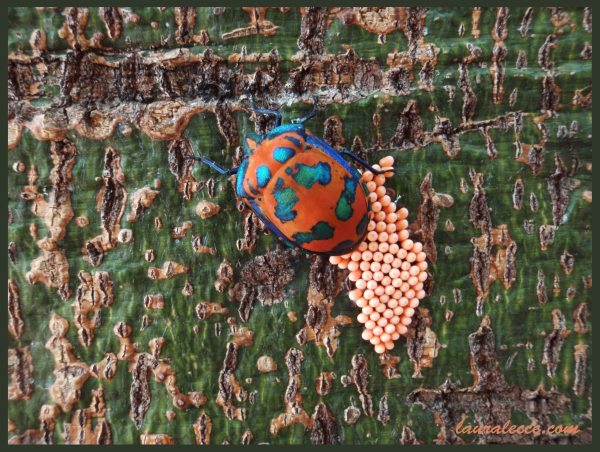
Whenever I see a hibiscus flower I immediately associate it with tropical vacations. Beautiful and large flowers, they come in a variety of stunning colors. In Australia we have a hibiscus harlequin bug (Tectocoris diopthalamus) which is also brightly colored, but a dreaded pest to the hibiscus plant. It will pierce through the stem of tender shoots and flower buds to feed on the sap, causing the buds to drop off. These bugs also feed on cotton, a few Australian natives and some fruit trees. Once a female lays her eggs she will stand guard and protect them. In Australia we call them stink bugs because when they get disturbed, they release a very bad smell which triggers mass smell production from nearby friends. Happy weekend everyone!
Hibiscus Harlequin Bug – Photograph by Laura Lecce
Unforgiving (acrylic on canvas. 36″ x 24″) – Art by Laura Lecce
A hot and burnt landscape of fiery red hills with a river running dry. A lone brittle tree struggling to survive in a desolate and unforgiving environment. What chance does the tree have to flourish, when the land is so unsupportive of life…. Is this my future?
This painting took me a very long time to finish. Sometimes I feel like I have a certain idea in my head as to what I want to paint and then try to force that idea into a painting. This one had quite a few evolutionary changes along the way, and finally I had to stop fighting it and just allow it to be what it wanted.
This small coral structure looks like a beautiful underwater castle. It is a hard coral which is home to millions of teeny tiny individual polyps in a castle constructed out of calcium carbonate. Other likely residents within this castle are single-celled algae. The algae use energy from the sun to make sugars and fats which they share with the coral allowing it to grow faster. The coral animals also make waste which feeds the algae. Together they make a very large and happy family of teeny residents in a beautiful castle. They even have a blue Christmas tree worm as a pet in the yard!
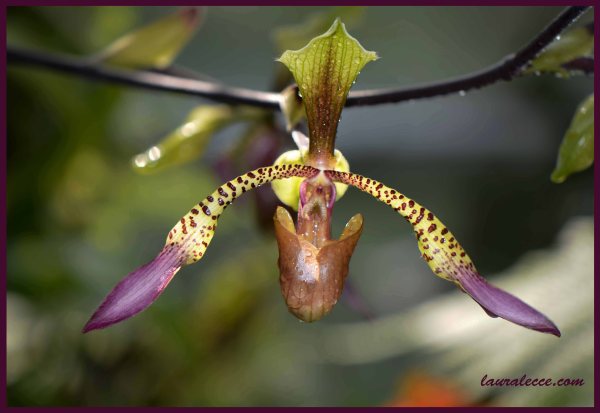
I’m not sure if any of my followers are orchid fanatics, nevertheless I will tread lightly. This photograph is of a paphiopedilum orchid, and I “think” it is Paph. Lowii but I cant be sure as it was unlabeled. This very cute family of orchids has a pouch-like labellum, and are quite easy to grow, making them one of the most widely cultivated and hybridized of orchids. They come in such a huge variety of colors, and some even have very beautifully mottled leaves (although P. Lowii does not). Paphs will usually only flower from a shoot once. After using a lot of its energy to flower, the remaining energy is put towards making new shoots to replace the parent once it dies. It becomes a cycle of making a new plant, flowering and then dying, and thus it is often possible to see multiple generations of plants in the same pot at once. Happy Friday and have a wonderful weekend!
St Andrews Cross Spider – Photograph by Laura Lecce
Not necessarily an image you want with your leisurely morning coffee whilst browsing your WordPress reader (sorry for that). This spider is just one of the species under the genus Argiope which are known for the striking colors on their abdomen. A. keyserlingi and A. aetherea are found in Australia and we call them St Andrews Cross spiders because they sit in the very center of the web with pairs of legs together in an X shape. They also often incorporate a much larger X across the web with silk (part of this can be seen in the bottom left of this photo). Rest assured, this is one of Australia’s friendly spiders which wont kill you 😉
It takes time to be old and wise – Photograph by Laura Lecce
I was lucky enough to encounter many Capuchin monkeys in Costa Rica. After watching them for some time, I was able to observe some of their relationships and behaviors. In the first image, I had clearly met one of the more senior and respected members of the group. This individual was happiest observing the humans that were observing him, and was quite content in sitting back and allowing the other younger capuchins to cause a raucous.
The Coast is Clear – Photograph by Laura Lecce
They often moved together as large family groups, and when they did it was like a tornado moving through the trees. At one point they needed to cross a road, and before letting the mums and bubs exit the safety of the trees, they sent out scouts (pictured in the second image) to make sure the coast was clear. Once the scouts gave the all clear, monkey after monkey came flying out of the trees to scurry across the road and back into the jungle. Some of their leaps from tree to tree were incredibly far and seemed very dangerous, but they were completely confident and surefooted.
Caught Making a Mess – Photograph by Laura Lecce
The monkey pictured in this last photo was caught making quite a mess with the little fruits hanging from this palm tree. Surely a source of food for these cuties, but at times it looked like it was having more fun throwing the fruits to the ground than actually caring to eat them. I think their cute little faces easily fool humans into thinking they are very friendly, but in contrary they can be quite aggressive and territorial and wont hesitate to flash some pretty sharp canines if you get too close.
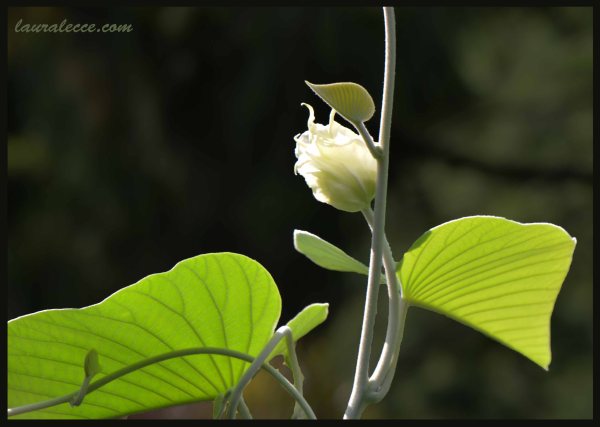
This week has been a hectic one at work, which will unfortunately continue all weekend. So for todays flower I felt the need to counteract the craziness with a peaceful and serene photograph. I have no idea what this plant is named, but it had only a few glorious white flowers on a giant vine. It caught my eye because of the way the light was shining on it. I hope it brings calm and peace to you all for the ending of this week. Have a lovely weekend!
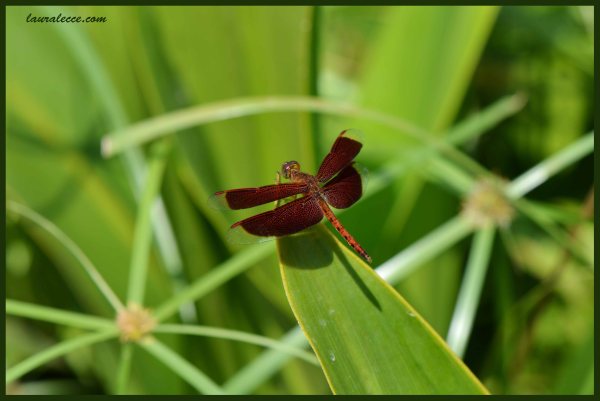
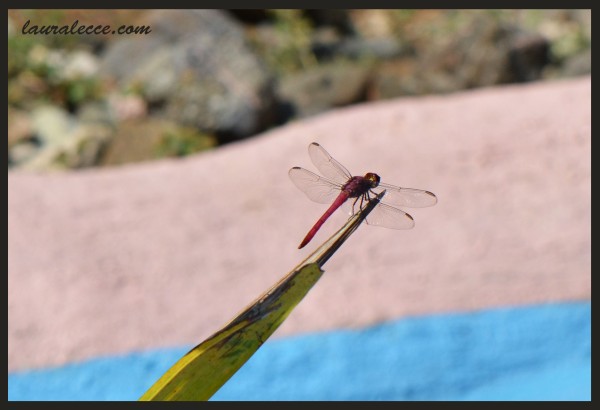
This one’s for you Walter… (for everyone else, if you want to see AMAZING dragonfly photos you should most definitely click here to visit Walter Sanfords blog). So here are my amateur attempts at photographing some dragonflies, and I’ve discovered that you need a lot of patience to do this. These first two are from Singapore, which were sitting in a giant lily pond in the national botanic gardens, a stunning place, especially if you like orchids.
Another Red Dragonfly – Photograph by Laura Lecce
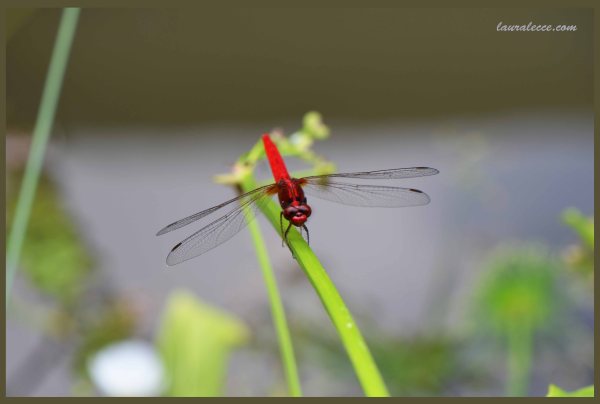
The last one was from Costa Rica, and was continually circling a small pool of water outside my door. I stood for at least 45 minutes (felt like hours) in sweltering hot sun and ridiculous humidity, sweating like never before, all waiting for this dragonfly to land so I could take a damn photo. It actually did land every now and then, always in the same spot, but only for a second before taking off again and flying in circles. So I knew exactly where to point my camera and wait for the landing. Disappointingly, this was as close as I could get, otherwise it refused to land at all. So not a great photo, but I really tried!





 Laura Lecce's art and photography