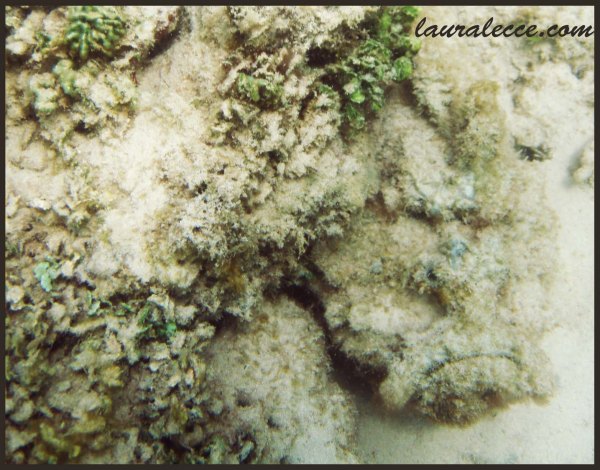
A stony-faced stare

A stone-faced stare – Photograph by Laura Lecce

Would you even know you were looking at one of the worlds most venomous fish? Anyone would be grumpy with a face like this one. This is a stonefish and as you can imagine is easily stepped on by people due to the fact that it is not easily distinguished from its surroundings. The venom from this fish is extremely painful and can be lethal, so of course (like most venomous things) it lives in waters around Australia. If you are unfortunate enough to be stung by this fish, heat treatment of the site can be used to destroy the venom. For more severe cases antivenom is administered. The moral of this story is that when snorkeling do not pick up or touch anything….. even something as harmless looking as a stone can kill you.

For other snorkeling posts please click here.
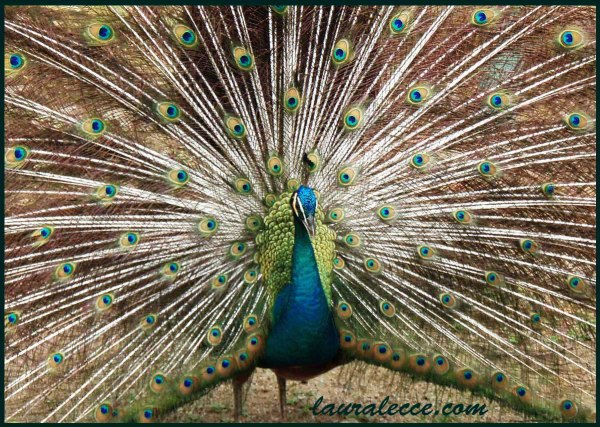
Showmanship is everything

The proudest peacock – Photograph by Laura Lecce

I had never really imagined what it would be like to meet a peacock, perhaps because I never thought I would ever actually meet one. However this beautiful male was strutting his stuff in a park in Malaysia and putting on the performance of a lifetime for anyone who was interested in watching. They are a fairly large bird, perhaps the size of a turkey, but with over 200 tail feathers extended they are about 6 feet (2 meters) wide. In the world of birds there is certainly a lot of pressure placed on males to outperform competing males with brighter colors, more feathers, and complex mating dances. Female peahens will prefer a male with  larger sized and greater number of eye spots, as this will likely result in larger and fitter peachicks. One stunning male will have a harem of rather plain looking females and will play no role in raising the young. This is probably for the best as it helps the well camouflaged females raise their young by safely blending in with the scenery.

For other bird posts please click here.

When science mimics nature

Science mimics nature - Photograph by Laura Lecce
Science mimics nature – Photograph by Laura Lecce

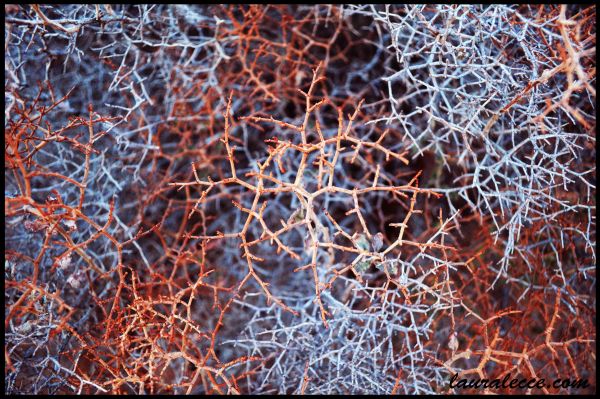
For this Friday instead of a flower I wanted to show you this photo I took of a brittle winter shrub I came across in Utah. I was attracted to the geometry of the branches, the different layers of focus and the contrasting segments of color that come together to form a very beautiful abstract image. Many things that scientists do can resemble this kind of picture. Some examples are the drawings of chemical structures consisting of different atoms and their bonds, or cells branching out to each other in a culture dish. This kind of picture reminds me that nature, science and art are intricately linked. I hope you can also appreciate the beauty in each of those. Happy weekend everyone!

Friday Flower – Frangipanis in baby pink

Frangipanis in baby pink - Photograph by Laura Lecce
Frangipanis in baby pink – Photograph by Laura Lecce

One thing I miss since moving to New York is the sweet smell of frangipanis. In Australia they grow in abundance in all but the colder cities and the flowering season goes for months. There are close to 300 different colors of frangipanis and all are incredibly beautiful. These trees make their own perfectly arranged bouquet of flowers at the end of each branch. The flowers are so soft and delicate that it feels great to stick your face and nose into them and take a deep breath of heavenly scent. Even once the flowers drop off they still look perfect and can be used as a beautiful decoration in your home by floating them in a bowl of water. Enjoy the weekend everyone!!!

Bighorn Sheep (which looks more like a goat to me)

Bighorn Sheep - Photograph by Laura Lecce
Bighorn Sheep – Photograph by Laura Lecce

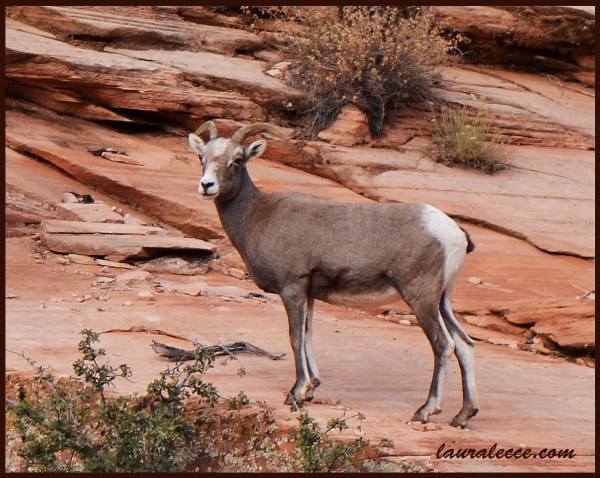
This dainty female bighorn sheep lives in Zion National Park in Utah. Zion has the perfect landscape for these sure-footed animals which gracefully hop around on very treacherous-looking cliff faces with incredible ease. They can navigate these terrains even as little lambs because pregnant mothers seek higher ground to give birth which is safer from predators. However, the areas that are safer from predators are less favorable for growing sufficient vegetation, so as soon as the lambs are agile on their feet they will follow their mother back down the cliff faces to find food. These animals are native to North America and their numbers suffered greatly with the introduction of domestic sheep which carry pathogens that are easily spread to wild populations. To me these bighorn sheep look more like goats and equally amusing to me, the white and fluffy mountain goats look more like sheep.  Zion has a herd of over 400 sheep and is a great location to see these gorgeous creatures which are most often spotted between the tunnel and east entrance to the park.

For other posts about Zion National Park please click here.

Friday Flowers – Daffodils

The daffodils are coming - Photograph by Laura Lecce
The daffodils are coming – Photograph by Laura Lecce

I feel like this is the bright and sunny photo from the end of a advertisement for allergy medication (when the person can finally enjoy the flowers because of anti-histamines). It’s as though the flowers are standing proud, chests puffed out and determined. This photo was taken last year at the very start of Spring. I had gone to the New York Botanical Gardens to see the orchid display in the glass conservatory. It was an incredibly icy cold day where the wind cuts right through you and it is painful to be outside. I spotted this gorgeous hill covered in hundreds of daffodils and couldn’t pass without a photo, even though I was absolutely frozen for doing so. I love that this photo gives the absolute opposite feeling of the reality of that day, it shows a perfectly sunny day with bright blue skies and warm yellow flowers. Daffodils belong to the genus Narcissus along with jonquils. They are commonly associated with the myth of Narcissus – a man who fell in love with his reflection in a body of water and realizing that his love would never materialize he died of his sorrow. Narcissus the plant then appeared at the place of his death (Sorry, I didn’t mean to get so dark). Instead, I will end by saying that the weather is warming, and soon these very cheerful flowers will be appearing all over Central Park. Happy weekend everyone!!!

Bat in a bind

Bat in a bind - Photograph by Laura Lecce
Bat in a bind – Photograph by Laura Lecce

This is an Australian flying fox hanging on my parents garden fence. Australia has a few different species of flying fox, some of which are among the largest bats in the world. Some people may be horrified by this devilish-looking vampire-like creature, but actually they have a very cute face. They are fruit, flower and nectar eaters by night and by day they are busy sleeping (when they are not screeching at neighbors for space on overpopulated tree houses). They live in huge family groups which can have thousands of bats. Unlike most bats they do not use echolocation as they have great vision and are known to use geographical landmarks to find their way home. How did this bat end up in my parents yard in broad daylight? Well, my dad had realized that his figs were getting eaten (usually it’s the birds that get to them). So he covered the fig trees with netting to stop the birds from accessing the fruit. My mum awoke the next morning to find an angry bat tangled in the netting which had been trying to get to the fruit, and a very curious cat on the fence keeping a close eye on this mysterious find. She called my brother to get some scissors to cut the bat out of the netting, which he did, all the while trying not to get bitten by this agitated critter. After being freed from the net the exhausted bat hung on the fence a while to find the energy to fly away home. (Photo is courtesy of my mum.)

Black currawong and her honey bush

Black currawong and her honey bush - Photograph by Laura Lecce
Black currawong and her honey bush – Photograph by Laura Lecce

This intense-looking bird is a black currowong native to Australasia that I photographed while hiking in Tasmania. These birds look quite similar to Australian magpies except that their eye color is yellow instead of red. They have a very special relationship with the richea honey bush and were featured in a David Attenborough narrated documentary called Life in the episode on plants. The honey bush encases its flowers in individual little pods which protect the flowers from cold weather and icy winds that are common in Tasmania. Unfortunately it also prevents successful pollination of the flowers by insects which cannot access them nor remove the protective outer casing. When warmer weather comes along the flowers produce a nectar which attracts the currawongs. They go about their day pulling off each of the little flower pods to access the nectar which also exposes the flowers to pollinating insects and thus the plant can reproduce.

For other posts from Tasmania please click here, or for birds please click here.

Angry Caracara

Angry Caracara
Angry Caracara – Photograph by Laura Lecce

This is an angry looking bird if ever I saw one! It is a caracara, which is a bird of prey belonging to the same family as falcons. Unlike falcons which are fast flying and skilled aerial hunters, these are the slower and lazier cousins which prefer to scavenge for prey that is already injured or dead. I’m pretty sure this is a northern caracara which has a less defined, patchy barring across the chest. The skin on their face ranges from yellow to deep red/pink depending on the age of the bird. This one was photographed in the Washington Slagbaai National Park in Bonaire, and as you can see he was not too happy about the photo.

For other posts on birds please click here.

Friday Flower – Desert Rose

desert-rose

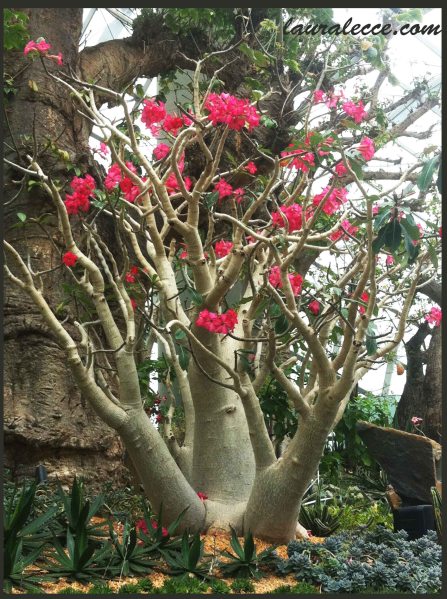
This stunning pink flower is called the dessert rose. Not only is it an impressive flower, but the plant itself is also very unique looking and an attractive plant to have in the garden or as a bonsai. It is native to Africa and The Middle East and is a close relative of the Frangipani and Oleander. The flowers come in various shades of pinks and reds. African hunters use the sap found in the trunk and roots to coat arrows as it contains cardiac glycosides which interfere with the contraction of heart muscle and is extremely toxic. These huge specimens that I photographed are found in the desert section of a stunning gardens in Singapore called Gardens By The Bay. Happy weekend everyone!!!

dessert-rose-plant